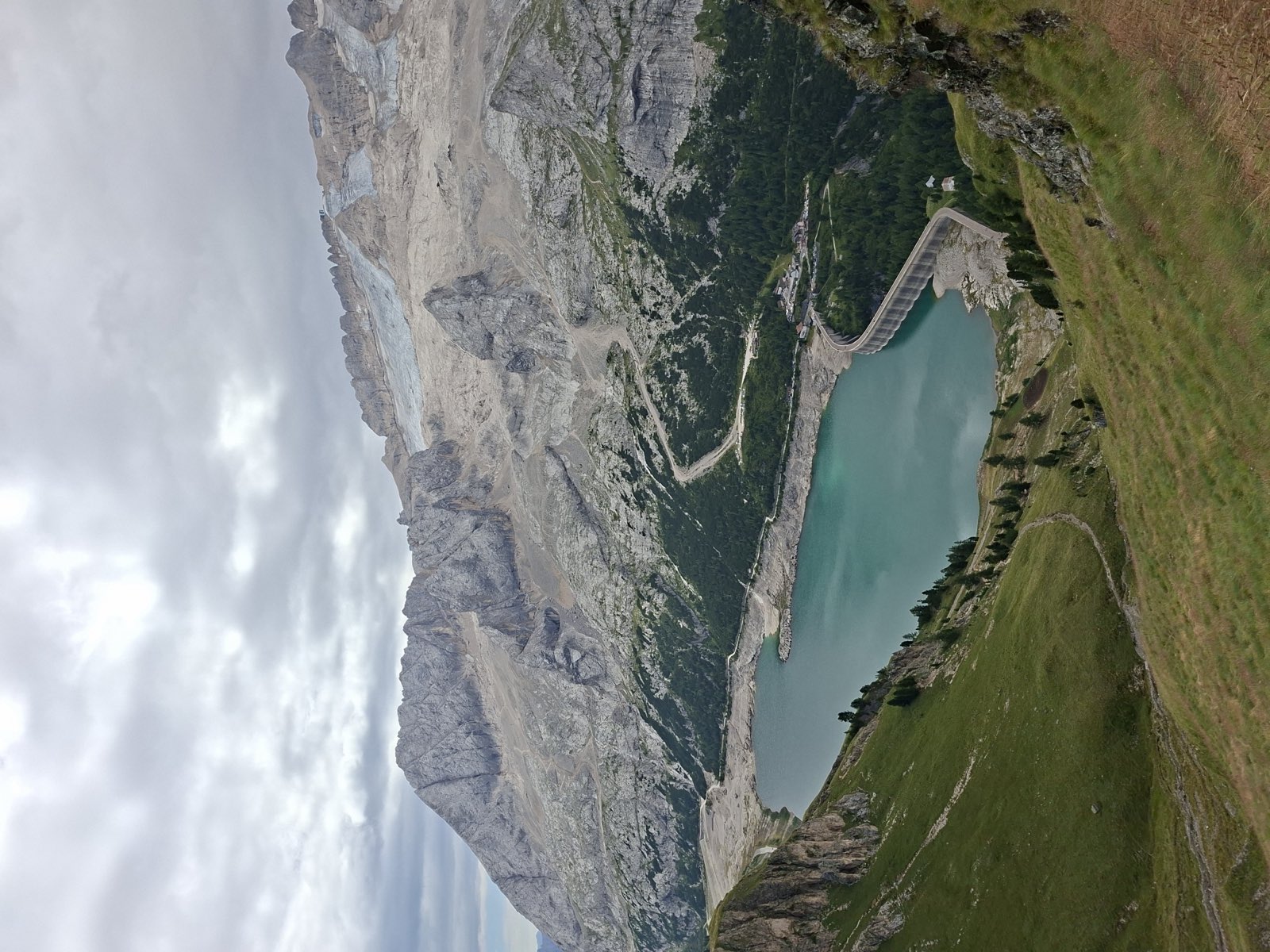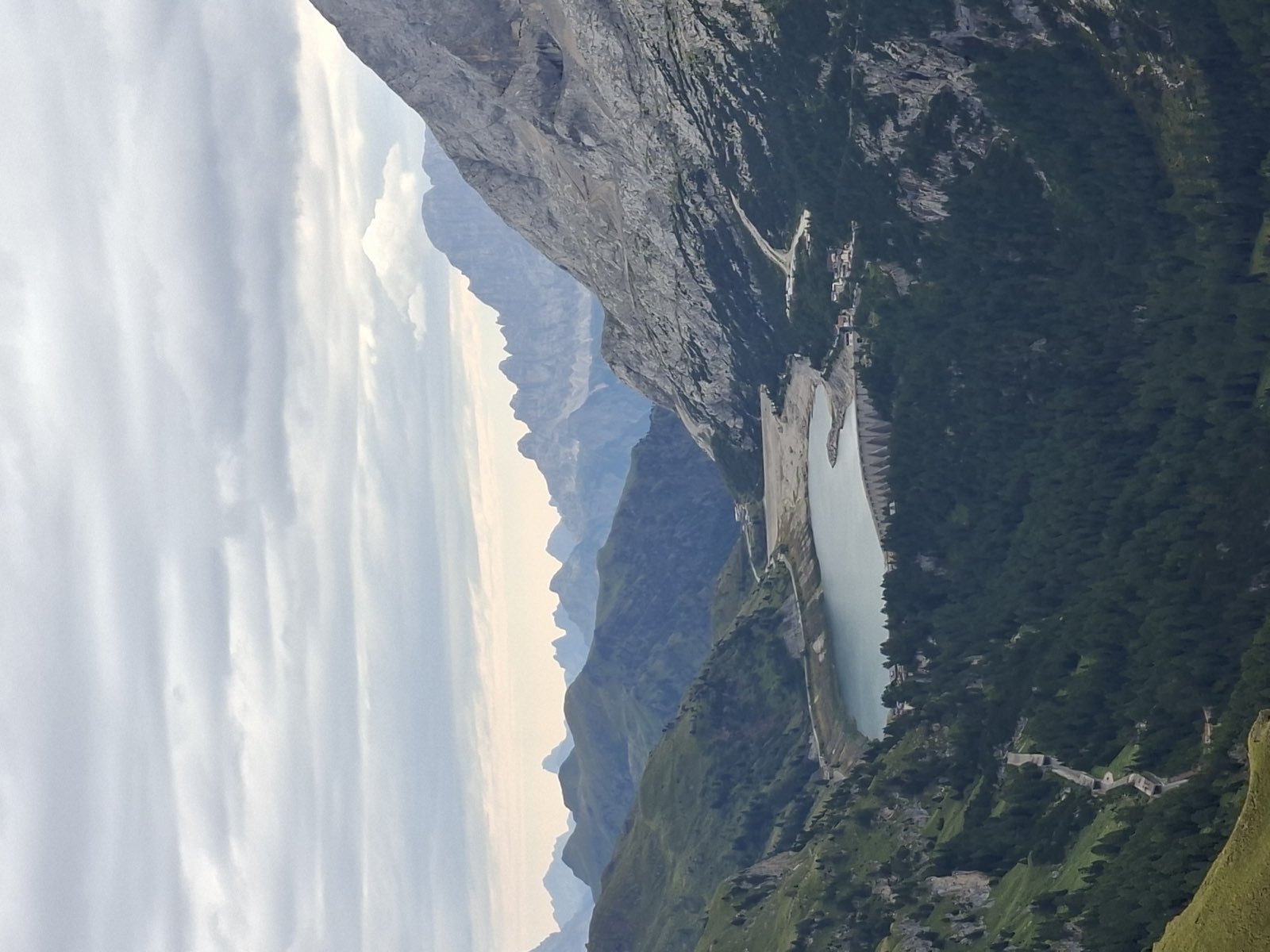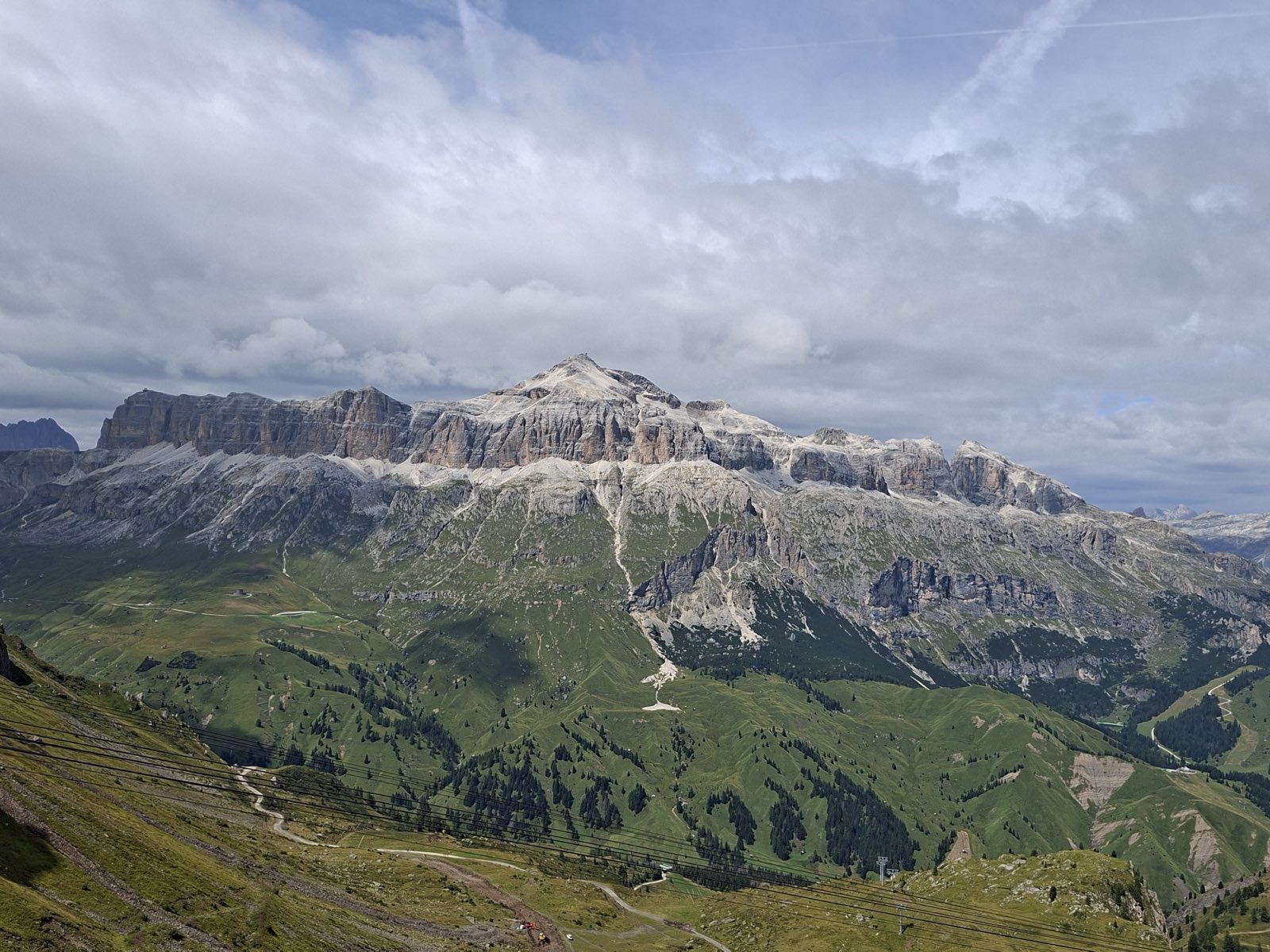
Piz Boè is the highest summit of the Sella Group and one of the very few three-thousanders in the Dolomites that experienced walkers can reach without true rock-climbing skills.
Thanks to the Sass Pordoi cable car, the route begins at 2,950 m above sea level. The path then crosses the high summit plateau, with some exposed sections, up to Rifugio Capanna Fassa perched right on top.
Piz Boè Summit Route: the easy three-thousander of the Sella is one of the routes we gathered by grade and by area: Trekking in the Dolomites: the best trails and how to plan your hike.
How to get there — Sass Pordoi (2.950 m, in funivia)
The most-used start is the top station of the Sass Pordoi cable car (2,950 m), which climbs from Passo Pordoi onto the Sella summit plateau in a few minutes. You reach the pass by car from Arabba on the Belluno side or from Canazei in Val di Fassa, with a large car park near the valley station. The cable car, which is chargeable, cuts out most of the climbing and drops you at almost 3,000 m. You can also walk up from the pass along trail 627 to the Forcella Pordoi. Check the lift timetable and set off early, because up there the best conditions come in the morning.
The trailhead is in the Arabba e Marmolada area. Check the travel guide for lift schedules, parking and access rules.
Stage by stage
1. From the cable-car top station
Cross the high plateau of the Sella, heading towards Rifugio Forcella Pordoi.
2. Final ridge to Piz Boè
Climb the trail, with some exposed passages, to Capanna Fassa on the summit.
When to go & weather
July to September is the suitable season, when the summit plateau is clear of snow and the Sass Pordoi cable car is running. Above 3,000 m the weather is in charge, so you want settled, clear days, avoiding strong wind, fog or leftover snow on the exposed sections. July and August are very busy, helped by the easy lift access, while September brings clearer air and fewer people. Set off early to reach the summit before the afternoon thunderstorms build and to enjoy the view under a clear sky.
Recommended gear
- Trekking boots with a good sole, a must on the stony, exposed sections
- Warm layered clothing, because at the summit above 3,000 m the temperature plummets
- A windproof and waterproof shell for the high-altitude climate
- Water, energy snacks and high-factor sun protection, as the radiation at altitude is strong
- Hat, sunglasses and a pair of light gloves
- Telescopic poles, useful on the plateau and the trail sections
Useful tips
- Climb in the morning and watch the sky. Above 3,000 m conditions change quickly and the wind can turn cutting
- On the more exposed passages of the final stretch you will find fixed ropes for support. It is not a true via ferrata, but you need a head for heights and a sure foot
- Treat yourself to a break at Capanna Piz Fassa on the summit, one of the highest huts in the Dolomites, with a 360° view from the Marmolada to the Catinaccio and the Pale
- Check the time of the last Sass Pordoi cable car down so you are not stranded up high on the way back
- If you are not used to altitude, climb calmly. The thin air of the summit plateau makes itself felt
Huts and rest points
- Rifugio Boè (2873 m) — In mezzo all'altopiano del Sella, tappa fissa per chi attraversa il gruppo. Details →
Frequently asked questions
Do you need equipment for Piz Boè via the normal route?
No, it is not a via ferrata. But there are exposed sections, so you need a sure step and no fear of heights. And remember you are above 3,000 m, so come well trained.
How much does the Sass Pordoi cable car cost to reach Piz Boè?
It is a paid service, with one-way or return fares that change with the season. To avoid surprises, check the current times and prices directly at the Passo Pordoi lifts.
Can you reach Piz Boè without taking the cable car?
Yes. You can walk up from Passo Pordoi, covering all the height gain along path 627 to the Forcella Pordoi, but it is a much longer and harder walk. Most people prefer the cable car to start already at altitude.
How long does it take to reach the summit of Piz Boè from the cable car?
From the top of the Sass Pordoi cable car, allow about an hour and a half to the summit at 3,152 metres, passing the Forcella Pordoi and path 638. The return takes more or less the same time.