Alpe di Siusi (Seiser Alm): what to see, do and where to stay

Alto Adige (BZ) · 1680 m s.l.m.

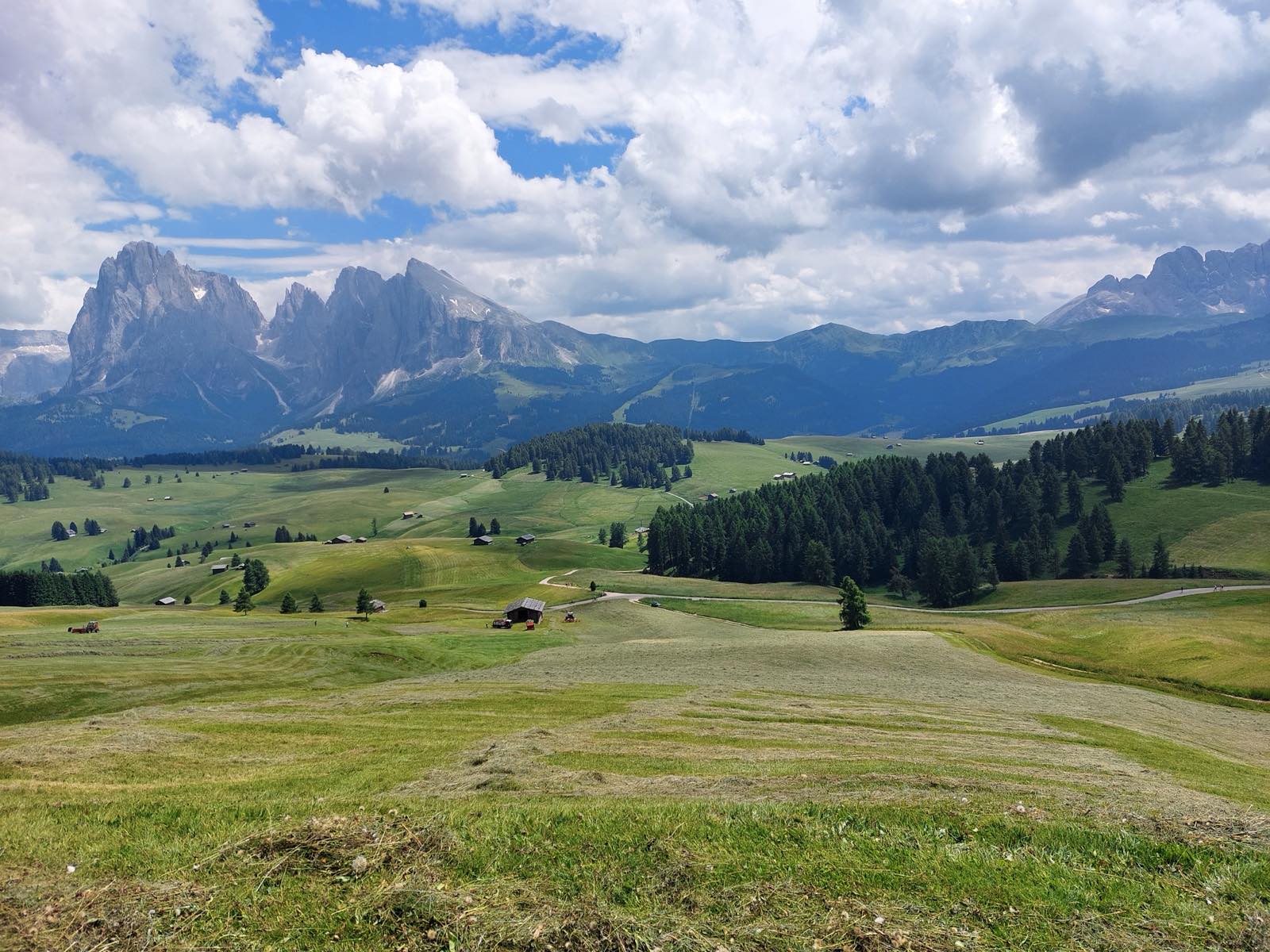
I prati dell'Alpe di Siusi sotto lo Sciliar

Foto: Albertomos · Public domain · Wikimedia Commons

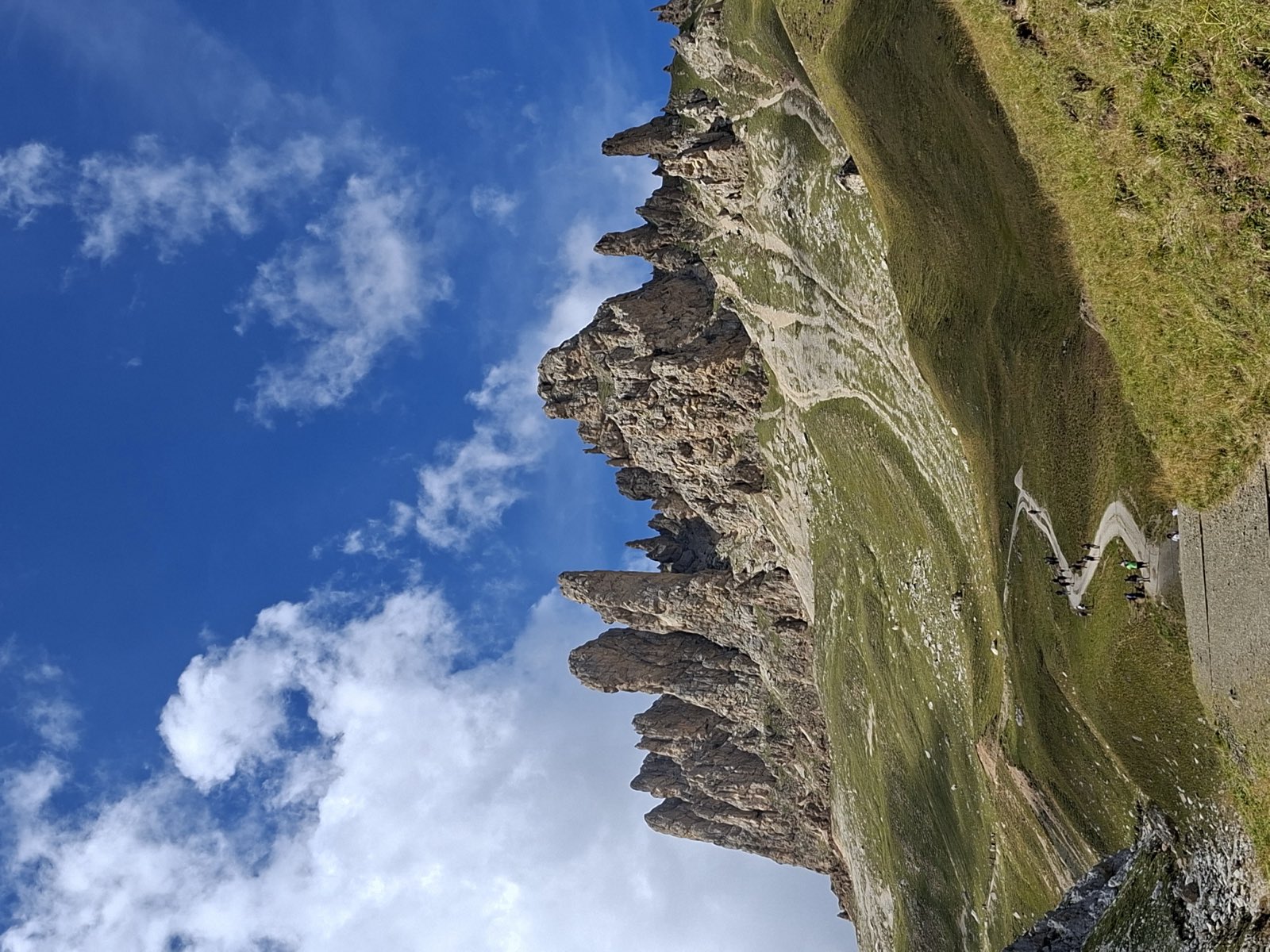
The Alpe di Siusi (Seiser Alm) is the largest high-altitude plateau in Europe: a sea of rolling meadows stretching over fifty square kilometres between 1,680 and 2,350 metres, presided over by the unmistakable silhouette of the Sciliar and the spires of the Denti di Terrarossa. Walking across it gives a sensation of moving through an infinite landscape, where grass ripples in the wind and historic alpine dairies punctuate the horizon. It has been summer pastureland for centuries.

The plateau belongs to the area of the Sciliar and to the villages of Castelrotto, Fiè, and Siusi, where Tyrolean farming culture is still deeply rooted. Since the Bronze Age these pastures have welcomed cattle, horses, and sheep in summer, and the bond between the people and this mountain has never been broken. The Sciliar in particular has always been shrouded in a legendary atmosphere, linked in popular imagination to stories of witches and their nocturnal gatherings.

On nearby Monte Bullaccia, the so-called Witches' Benches still stand — the destination of a short and evocative panoramic walk that brings this heritage of storytelling to life. The decision to strictly limit car traffic, banning access to the plateau during the middle hours of the day, reflects a deliberate commitment to conservation. In summer the Alpe is the realm of easy, panoramic hiking; in winter it becomes a paradise for cross-country skiing, snowshoeing, and gentle downhill runs.

Nearby trailsAlpe di Siusi (Seiser Alm)

See all

Mountain hutsAlpe di Siusi (Seiser Alm)

When to go & weatherAlpe di Siusi (Seiser Alm)

Summer, from June to September, is the ideal season for the easy, panoramic walks across the rolling meadows under the Sciliar and the Denti di Terrarossa. Winter, from December to March, transforms the Alpe into a paradise for cross-country skiing, snowshoeing, and gentle downhill runs. The early-summer wildflower bloom is a spectacle in itself, while September delivers crisp air and clear light. Autumn colours the pastures and opens up sharp views of the surrounding Dolomites.

How to get thereAlpe di Siusi (Seiser Alm)

By car, leave the A22 at Bolzano Nord and follow the road toward the Sciliar to Siusi, from which the cable car rises to the plateau: in fifteen minutes it climbs around 800 metres of altitude to above 1,800 metres. Car access to the Alpe is banned between 9 am and 5 pm, making the cable car the main way up. The nearest rail station is Bolzano, connected to Siusi and Castelrotto by scheduled buses. On the plateau, movement is on foot or by shuttle bus, since private vehicle traffic is kept to an absolute minimum.

Frequently asked questionsAlpe di Siusi (Seiser Alm)

How do you get to the Alpe di Siusi?

The main access is by cable car from Siusi, since car access to the plateau is banned between 9 am and 5 pm. On the plateau itself, visitors move on foot or by shuttle bus.

Is the Alpe di Siusi suitable for families?

Yes, it is a perfect family destination thanks to the flat meadows, easy trails, and numerous alpine dairies reachable on short walks. The near-total absence of traffic makes it especially safe for children.

How many days do you need for the Alpe di Siusi?

One or two full days are enough to enjoy the panoramas and walk several trails on the plateau. Those wishing to combine longer hikes toward the Sciliar or the mountain huts can extend their stay.

Can you drive to the Alpe di Siusi?

Car access is permitted only outside the 9 am–5 pm window, typically in the evening and early morning, and is generally limited to guests staying on the plateau. The cable car from Siusi therefore remains the most practical and recommended way to arrive.