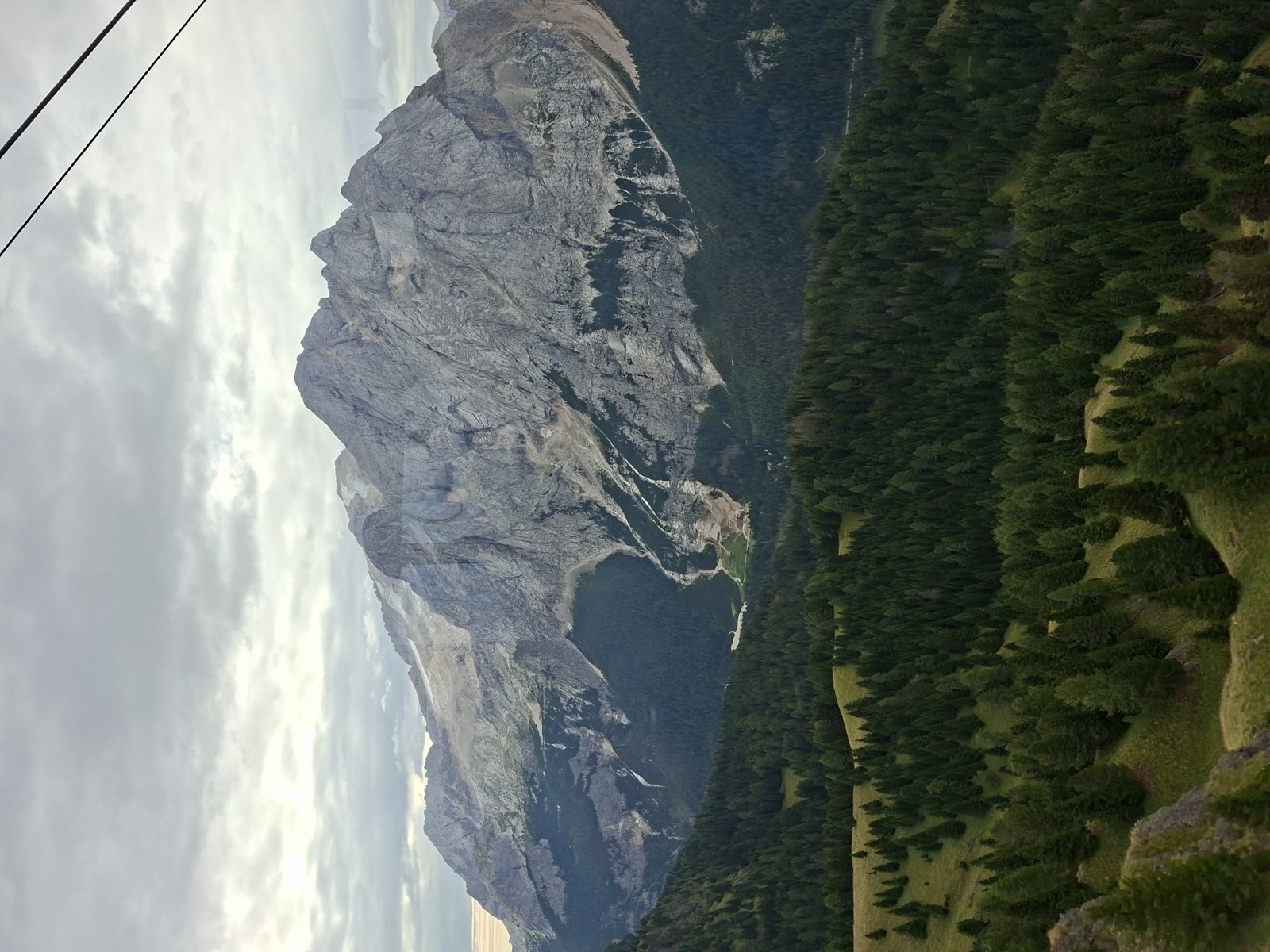
At 3,343 metres on Punta Penia the Marmolada is the highest peak in the Dolomites, the Queen, as everyone calls it. It also holds the only real glacier in the group, now retreating fast and become, against its will, the symbol of how fragile the high mountains are. To reach it without being a mountaineer, start from Malga Ciapela on the Belluno side, at around 1,450 metres: the Move to the Top cable car climbs in three stages and, after the Coston d'Antermoja and Serauta stations, touches Punta Rocca at about 3,265 metres. From up there, on a clear day, the view runs unbroken across most of the Dolomites and beyond.
The true summit, Punta Penia, remains mountaineering ground. But from the panoramic terrace at Punta Rocca the landscape is already the one they earn, in safety and without the effort: below opens the sweep of the glacier, ahead a line of peaks each better known than the last. At the top station there is also a small grotto-chapel cut into the rock, holding a statue of the Madonna donated and blessed by Pope John Paul II during his visit in 1979.
Coming up here is above all a journey into memory. At the Serauta station, around 3,000 metres, the Museum of the Great War looks out onto the tunnels soldiers carved into the ice between 1915 and 1917, when the front line ran exactly through here. It is a story that keeps resurfacing on its own, because as the glacier retreats it gives back what it once swallowed.
In winter the same mountain changes trade. The Bellunese run drops from the Marmolada, one of the longest descents in the Dolomites by total vertical, and the lifts belong to the Dolomiti Superski pass circuit. In summer it is one of the few places above three thousand metres you can reach even if you do not walk in the mountains.
How Ghiacciaio della Marmolada e Punta Rocca in funivia fits with the other ski areas, lifts and seasons included: Skiing in the Dolomites: Ski Areas, Dolomiti Superski and the Sellaronda.
Frequently asked questions
Where does the Marmolada cable car depart from?
From Malga Ciapela on the Belluno side, at around 1,450 metres. The Move to the Top cable car climbs in three stages, passing Coston d'Antermoja and Serauta, and reaches Punta Rocca at about 3,265 metres.
Do you need to be a mountaineer to go up the Marmolada?
No. The cable car takes you to Punta Rocca above 3,250 metres with no mountaineering experience at all, panoramic terrace included. The true summit, Punta Penia at 3,343 metres, is mountaineering ground.
What is there to see at the top of the Marmolada?
A huge view over the Dolomites from the Punta Rocca terrace, the grotto-chapel with the Madonna statue blessed by John Paul II in 1979 and, at Serauta station, the Museum of the Great War looking onto the tunnels carved into the front line.
Can you still visit the Marmolada glacier?
The glacier is still there and you see it close up from the Punta Rocca terraces, but it retreats year on year, and it is exactly by looking at it that you notice how much it is changing. You do not walk on the glacier without a mountain guide and proper equipment.