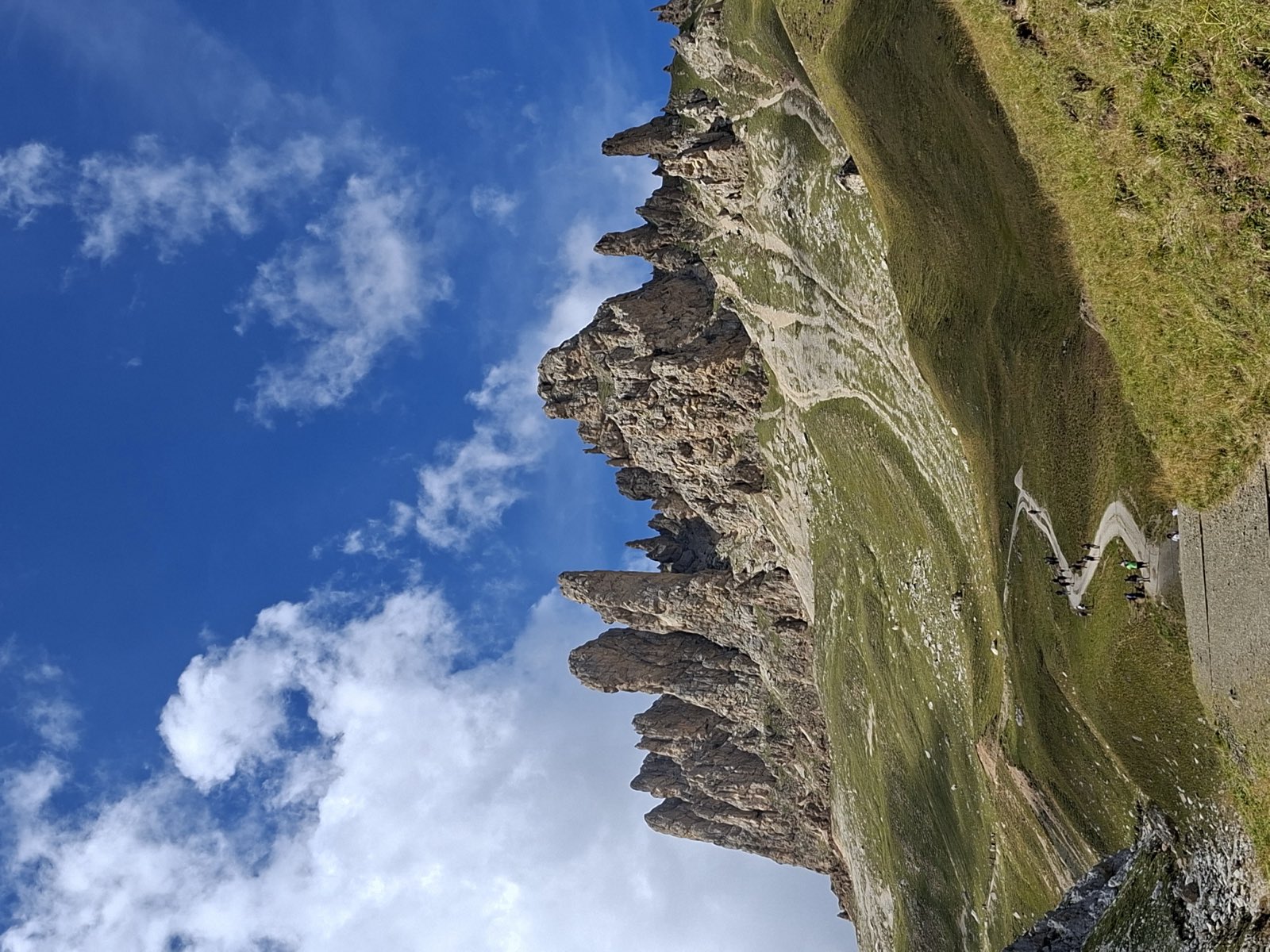
Few mountains are as easy to pick out as the Sciliar (Schlern). It closes off the Alpe di Siusi to the south, and on its own it sums up what people picture when they think of the Dolomites. Its highest point is Monte Pez, at 2,563 metres, and the massif ends in two summits, Punta Santner and Punta Euringer, that stick up above the meadows like the prow of a ship. Right next to it, the Denti di Terrarossa (Rosszähne) form a ridge of pinnacles that turn red in low light. The German name says it plainly: Rosszähne means horse's teeth, and the pointed shape really does look like a row of teeth.
Up on the summit plateau, at 2,457 metres, sits the Rifugio Bolzano (Schlernhaus). It's one of the oldest huts in the Dolomites, so solid and so cut off that people call it the castle among the crags. From there you can see all the way to the Catinaccio, the Sassolungo and the Latemar. Walking up from the Alpe di Siusi means following marked trails that ask for fit legs, and the harder ridges have via ferratas meant for experienced climbers. The whole area sits inside the Sciliar-Catinaccio Nature Park, the first one set up in South Tyrol, and it's part of the UNESCO World Heritage Dolomites.
To see where Sciliar e Denti di Terrarossa fits among everything else in the Dolomites: What to See in the Dolomites: The Complete Guide.
Frequently asked questions
How do you reach the Sciliar from the Alpe di Siusi?
From the plateau you set off on foot along marked trails that climb to the Rifugio Bolzano at 2,457 metres. It's a hike for fit walkers. The Denti di Terrarossa, though, you can take in easily from the scenic footpaths that cross the alp.
Why are they called Denti di Terrarossa?
The Italian name points to the reddish tones the rock takes on at sunset, and the German name Rosszähne means horse's teeth. Both describe the same thing: a row of sharp spires lined up like a set of teeth.