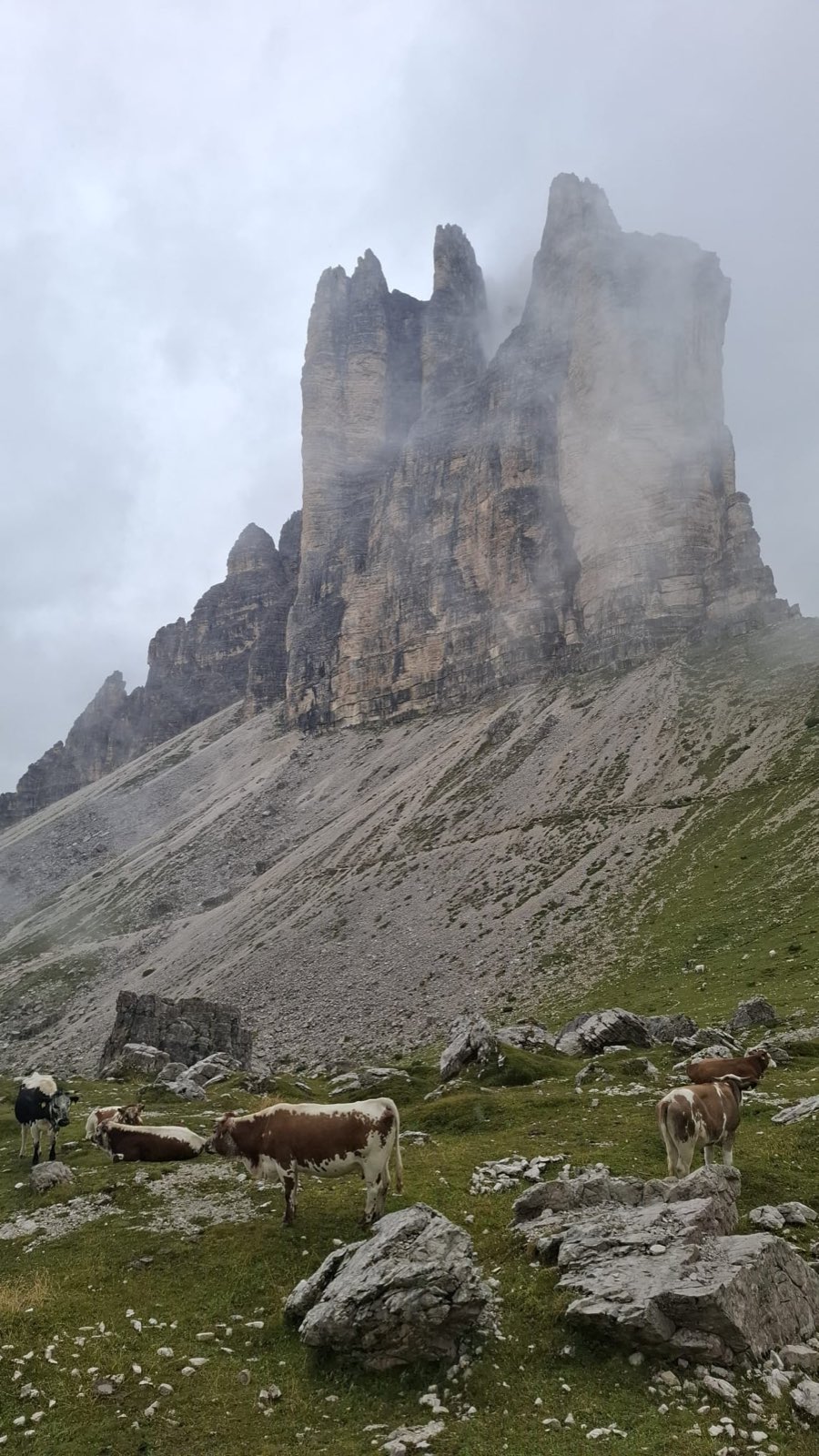
Almost everyone knows the Tre Cime from the south side: easy and busy, reachable by road all the way to the Rifugio Auronzo. The north face is a different thing altogether. Climbing from the Val Fiscalina above Sesto, the Cima Grande (2,999 metres), the Cima Ovest and the Cima Piccola show up as three dark, vertical towers, and their north walls are among the most famous in the Alps, the stage for feats that shaped the history of climbing. This is the wilder side, the one that really gets across the scale of the thing.
The classic route is the CAI 102 trail, which starts on the Val Fiscalina valley floor, follows the stream, and turns rockier as it climbs to the Rifugio Locatelli at 2,405 metres. That's a good three hours of walking with around 1,000 metres of climbing, and from up there the most striking head-on view of the three towers opens up. Along the route and around the hut, trenches, tunnels and positions from the First World War remain, since this was one of the highest and harshest front lines of the whole conflict. Leave early, bring proper boots, and dress in layers: the weather turns fast up here.
To see where Versante nord delle Tre Cime di Lavaredo fits among everything else in the Dolomites: What to See in the Dolomites: The Complete Guide.
Frequently asked questions
What is the difference from the south side?
The south side is reachable by car to the Rifugio Auronzo and gets very busy. The north side, from the Val Fiscalina, needs a harder climb on foot along trail 102, but it pays you back with the head-on, most imposing view of the north faces.
Are there traces of the Great War?
Yes. Along the trail toward the Rifugio Locatelli and around the group, you can still see trenches, tunnels and positions from the Dolomites front of the First World War, which ran here across the rock at over 2,000 metres.