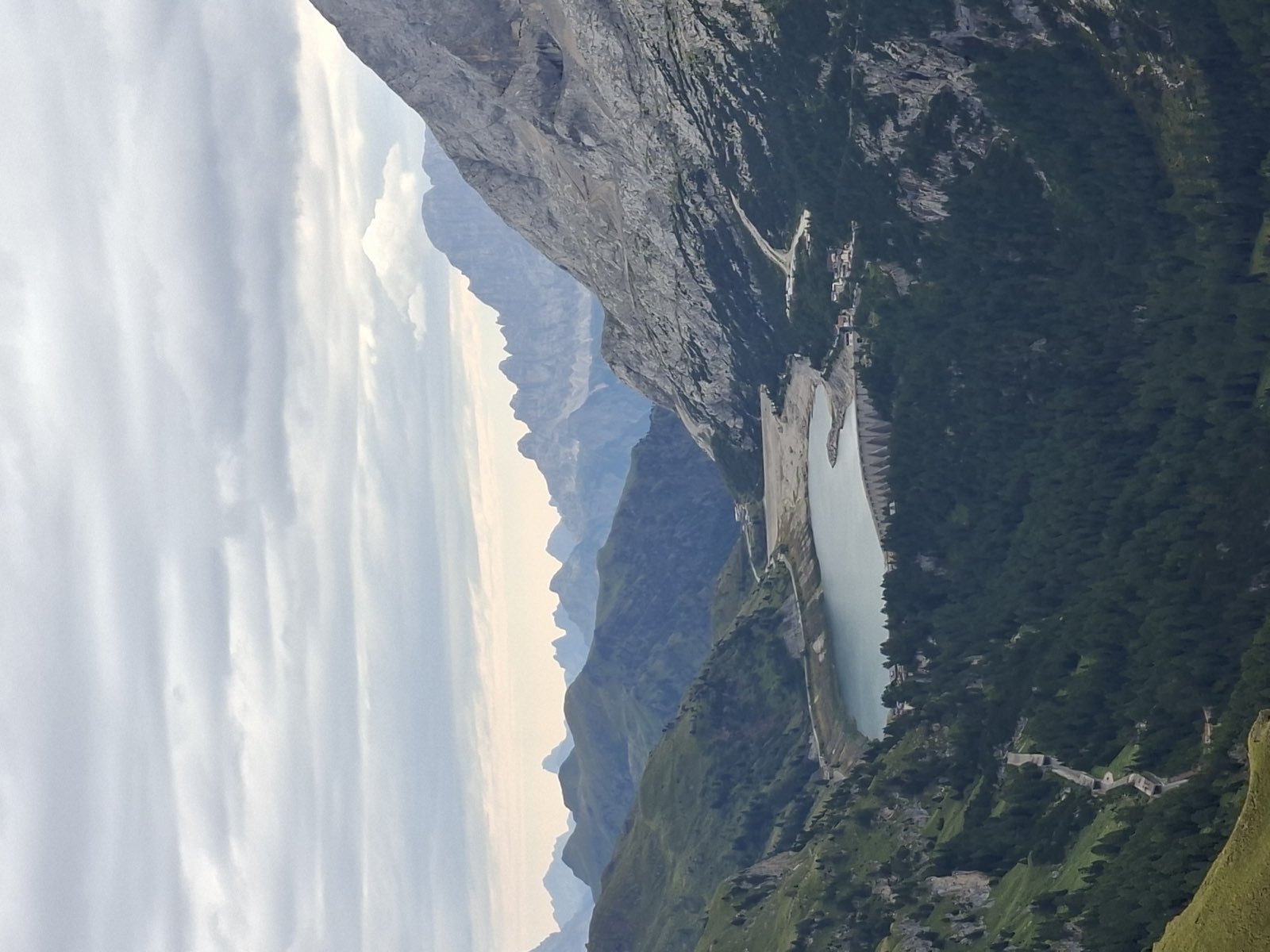
Every guide says the same thing: set off early. It's good advice and it still holds. But it only covers half the day, because it looks at the moment the car park fills and not at the moment it empties.
Log the occupancy hour by hour from 1 June to 15 September and it turns out that the full period is much shorter than it seems. At Passo Sella it usually starts between 9 and 11 am and ends between noon and 2 pm: a little over three hours on average, inside a sixteen-hour day.
Three hours, not the whole day
A typical August day at Passo Sella always has the same profile: the sensor shows it empty until 8 am, the car park fills between 8 and 10, stays full until 1 or 2 pm, then empties through the afternoon and by around 4 pm it is empty again.
The logic is the hiker's, not the day-tripper's: you go up in the morning, you walk, you come down in the early afternoon. Someone arriving at two in the afternoon, against every instinct, finds more space than someone arriving at ten.
The pattern repeats at the other car parks we monitor in the valley, with the same shape. For those, though, we give no precise times: their sensors give irregular readings, and Sciuz, for one, shows as full even at 3 in the morning.
- Passo Sella: usually full between 9 and 11 am, space usually returns from 2 pm (65 full days out of 93 valid)
- Sciuz: full on 27 days out of 107, usually around the middle of the day, space returns in the afternoon, later than at the Sella
- Mont Sëuc garage in Ortisei: full on 40 days out of 106, around the middle of the day, space returns in the afternoon, later than at the Sella
- Plan de Gralba: rarely full, 7 days out of 77, at times that follow no pattern
When the window works and when it doesn't
This is not a general invitation to set off late, because for many hikes that would be poor advice. By 2 pm a long route no longer fits into the day, and in summer especially the afternoon is thunderstorm time. In the Dolomites storms build up regularly, and they are not a minor detail.
The window works for three specific things: a short walk, lunch at a mountain hut, and the light at the end of the day, which is what photographers are after and which simply doesn't exist at nine in the morning.
If you have a long route or a via ferrata in mind, the window is no use to you: what you need is an early start, and at Passo Sella in high season that means arriving before 9 am. Parking fees and alternative car parks are in our guide to parking at Passo Sella.
The afternoon is also the empty part of the mountain
There is a second effect that the numbers suggest but don't measure directly: if the car parks empty in the early afternoon, there are fewer people on the trails from 2 pm onwards.
That is an inference, not a measurement: we count parked cars, not people walking. But the direction is clear, and anyone who knows these places will confirm it. Late afternoon at altitude is the quietest and least busy part of the day.
It's worth remembering the next time you read that the Dolomites are unbearable in summer. They are unbearable in one precise time slot, the one in which everybody goes. It's the mechanism we describe in our guide to overtourism: the problem is not how many people go up, it's how little they are spread out over time.
How these numbers were collected
The Autonomous Province of Bolzano publishes the free spaces in these car parks in real time, under an open licence, but keeps no history: it only shows the current value. We have been recording the day-by-day series ourselves since 1 June 2026.
For each hour we keep the lowest number of free spaces, that is the moment of greatest pressure: that is why the times are bands, not minutes. They are local time: an earlier version of this page gave them in UTC, two hours behind, and was corrected on 16 September 2026. 'Space returns' means the car park shows at least twenty free spaces again, not one: a single space is no real chance for someone who is still on the road.
The full picture, with the month-by-month trend and the comparison between days, is in our analysis of how summer 2026 is going in the Dolomites, updated with data up to 15 September.
Frequently asked questions
What time does the Passo Sella car park empty?
Between noon and 2 pm, on the days it had filled up: usually from 2 pm there are at least twenty free spaces again. The full period usually starts between 9 and 11 am and lasts a little over three hours on average: before 9 am and from 2 pm onwards we never found it full.
Is it really worth arriving in the afternoon?
It is if you have a short walk, lunch at a hut or late-light photos in mind. It isn't for a long route or a via ferrata, because there isn't enough time left and in summer the afternoon is when thunderstorms come.
Does the same apply to the other car parks in the area?
Yes, with the times shifted later: Sciuz and the Mont Sëuc garage in Ortisei free up in the afternoon, after Passo Sella. We give no precise times, because their sensors give irregular readings. The shape of the curve is the same: filling in the morning, emptying in the afternoon.
Are there fewer people on the trails in the afternoon too?
Very probably, yes, but it is an inference and not a measurement: the sensors count parked cars, not people walking. If the car parks empty in the early afternoon, though, the direction is hard to argue with.