
Sight · Alpe di Siusi (Seiser Alm)
Laghetto di Fie e castelli della zona
A swimming lake at the foot of the Sciliar, among the cleanest in Italy, and the old castles that watch over the valley, above all Castel Presule.
Valley by valley, the sights worth the trip in the Dolomites: peaks, lakes, plateaus, waterfalls and viewpoints, with what to see and how to reach each one.
The lakes have their own index, with the swimming rule checked one by one: the lakes of the Dolomites.
Sight · Alpe di Siusi (Seiser Alm)
A swimming lake at the foot of the Sciliar, among the cleanest in Italy, and the old castles that watch over the valley, above all Castel Presule.

Sight · Alpe di Siusi (Seiser Alm)
From the plateau you get some of the best views in the Dolomites: the Sassolungo standing to the west and the long wall of the Catinaccio catching fire at sunset.

Sight · Alpe di Siusi (Seiser Alm)
The largest high-altitude meadow in Europe: 56 square kilometres of rolling pasture dotted with wooden barns and dairy huts, spread between the Sciliar and the Sassolungo.
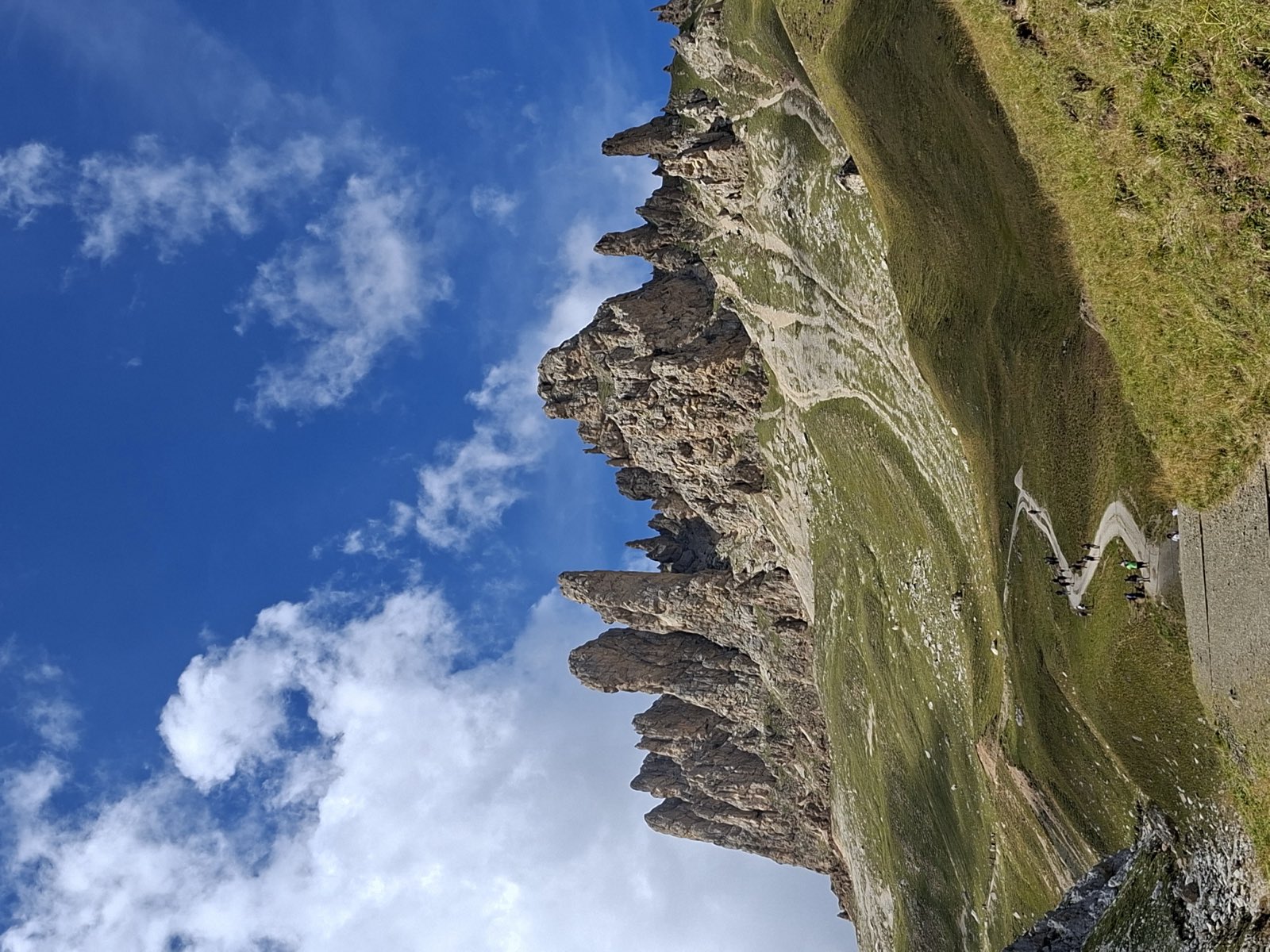
Sight · Alpe di Siusi (Seiser Alm)
South Tyrol's signature mountain: the flat-topped Sciliar massif, crowned by the twin towers of Santner and Euringer, with the jagged spires of the Denti di Terrarossa just beyond.

Sight · Alta Badia
The panoramic plateau of Alta Badia between Corvara and San Cassiano: a rolling sea of meadows with the Sella group, the Sassongher and the Marmolada always in view.

Sight · Alta Badia
The rural village of La Val and the well-known Armentara meadows: a sea of wildflowers at the foot of Sasso di Santa Croce, one of the most genuine corners of Alta Badia.

Sight · Alta Badia
One of the most popular via ferratas on the Sella, with a Tibetan bridge slung over the void, leading up to Rifugio Pisciadù and its high mountain lake.

Sight · Alta Badia
The rock pyramid that stands alone above Corvara and Colfosco: the signature mountain of Alta Badia and a 360-degree viewpoint over the Dolomites.
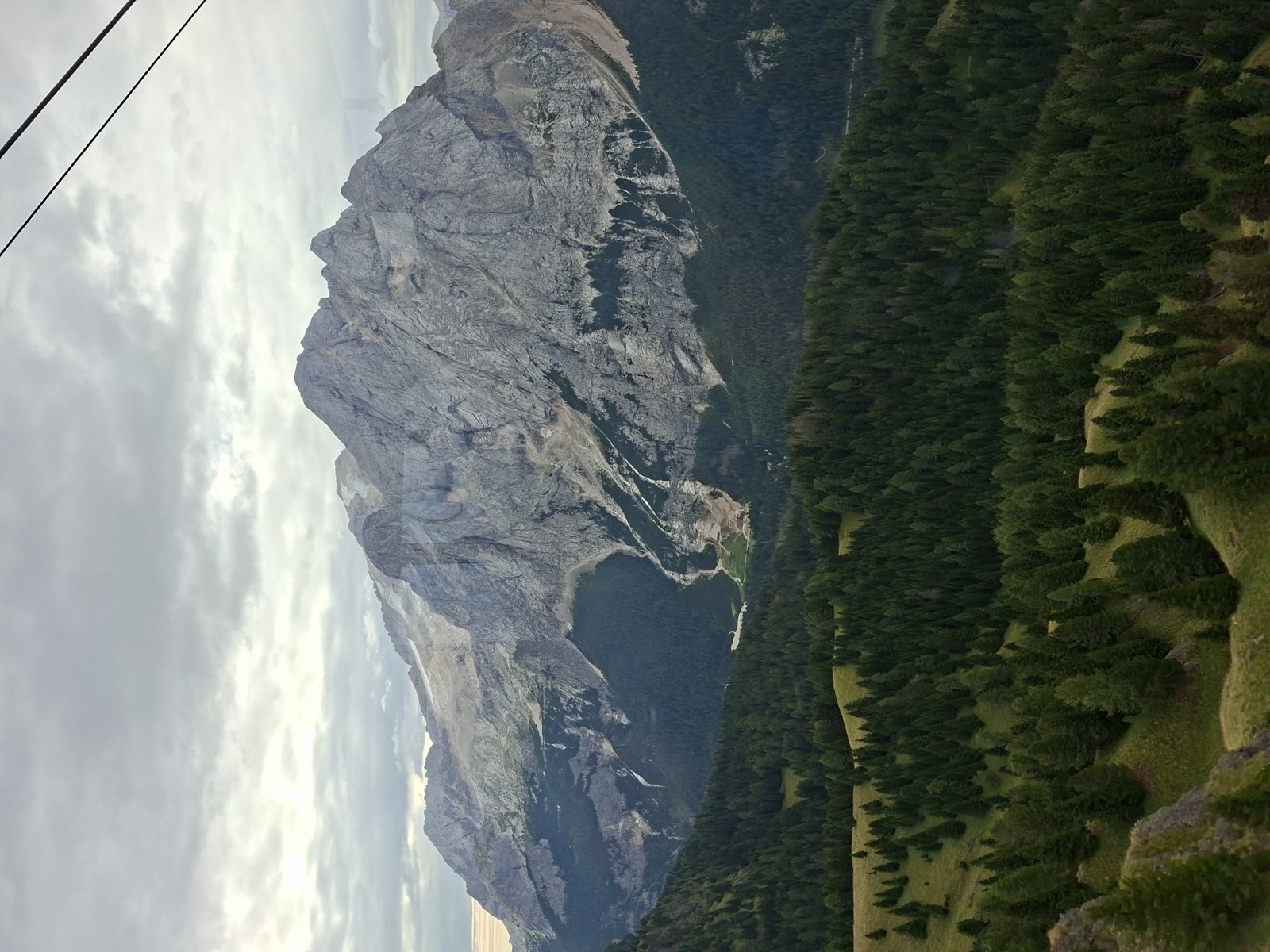
Sight · Arabba e Marmolada
The Queen of the Dolomites is within reach without being a mountaineer: the cable car leaves Malga Ciapela and climbs in three stages to the Punta Rocca terrace, above 3,250 metres, between the retreating glacier, the Madonna chapel and the Great War museum cut into the front line.

Sight · Arabba e Marmolada
The highest museum in Europe, suspended at 3,000 metres, tells the story of the war fought inside the glacier.
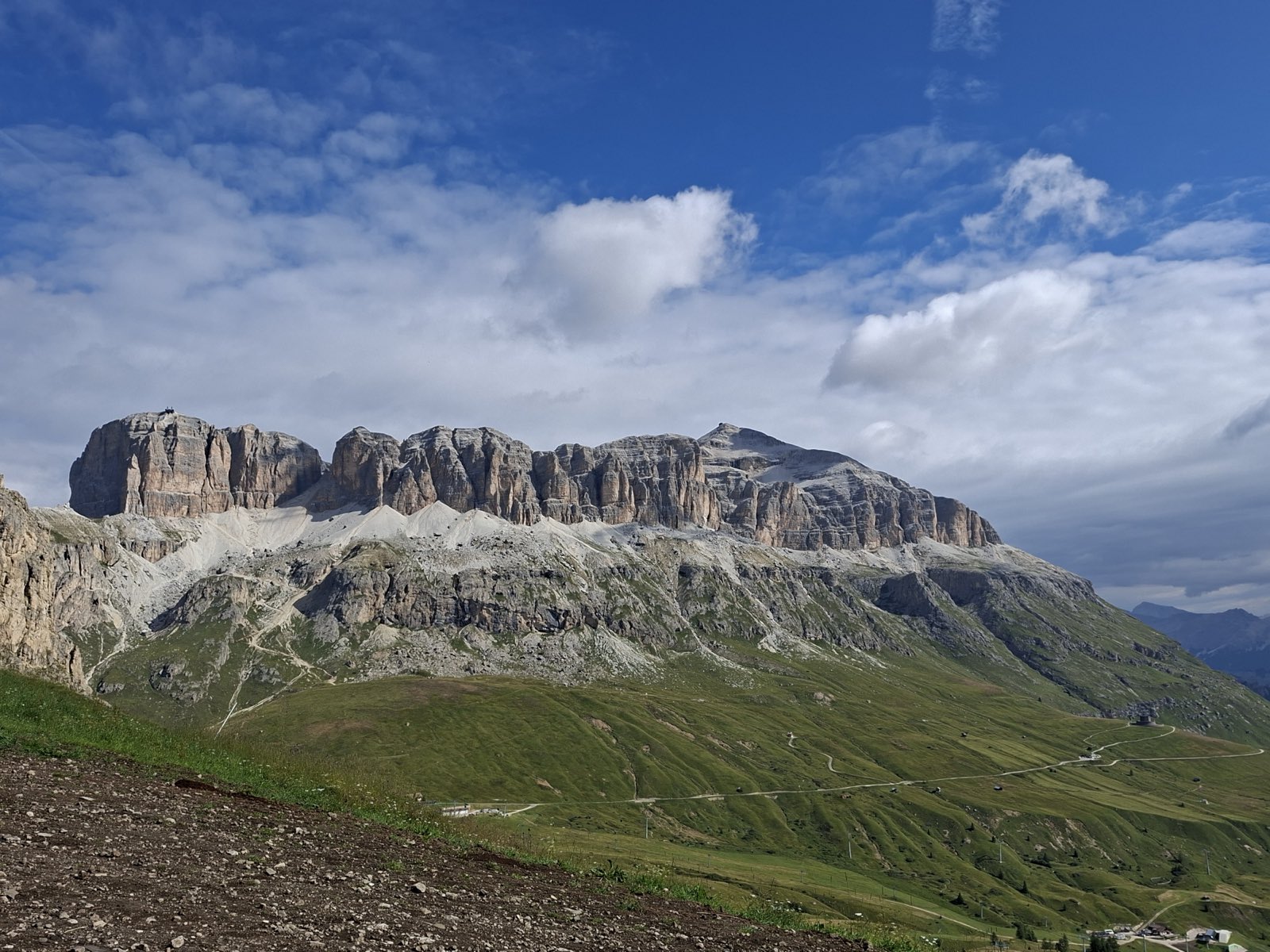
Sight · Arabba e Marmolada
The key pass of the Sellaronda, crossroads for skiers and cyclists, with a cable car up to the Dolomites Terrace.

Sight · Arabba e Marmolada
The finest panoramic balcony overlooking the Marmolada, the ancient bread route between Pordoi and Fedaia.

Sight · Arabba e Marmolada
A narrow gorge carved by the Pettorina stream, with tall walls and waterfalls, running between the village of Sottoguda and Malga Ciapela at the foot of the Marmolada.

Sight · Auronzo e Misurina
A forest of sharp spires, towers and pinnacles: dolomite erosion at its most extreme, and one of the most photographed subjects in the Dolomites.

Sight · Auronzo e Misurina
The pearl of the Cadore: an alpine lake at 1,754 metres, known for the purity of its air, ringed by the Cadini peaks and a short drive from the Tre Cime.

Sight · Auronzo e Misurina
The two-kilometre turquoise lake that runs through Auronzo di Cadore: lakeside walks, canoes and pedalos. Swimming, however, is not allowed.

Sight · Auronzo e Misurina
A plateau where around 14,000 soldiers died between 1915 and 1917, now an open-air museum with restored trenches, tunnels and walkways.

Sight · Comelico e Sappada
The old hamlets of Sappada, built in the traditional blockbau timber style, at the heart of a German-speaking enclave that's one of the Most Beautiful Villages in Italy.

Sight · Comelico e Sappada
The waterfalls of the Muhlbach stream, dropping around twenty metres between the rocks, reached on a short, cool, shaded walk.

Sight · Comelico e Sappada
The wild peaks that close the Comelico to the north, from the Croda Rossa di Sesto to Cima Undici: climbing country, via ferratas and First World War memories.

Sight · Comelico e Sappada
In the Val Sesis, at the foot of Monte Peralba, the river Italians call sacred to the Fatherland begins. A place that carries real weight, in a quiet alpine valley.

Sight · Cortina d'Ampezzo
Spectacular waterfalls tucked in a shaded forest gorge just north of Cortina, in the Ampezzo Dolomites Nature Park.

Sight · Cortina d'Ampezzo
A cluster of near-perfect rock towers above Cortina, a much-loved climbing spot and one of the finest open-air museums of the First World War.

Sight · Cortina d'Ampezzo
One of the most famous lakes in the Dolomites, with a striking turquoise colour, set in a wild amphitheatre below the spire of the Dito di Dio.

Sight · Cortina d'Ampezzo
The highest refuge near Cortina, with what many call the finest panoramic terrace in the Dolomites, and tunnels cut through the mountain during the Great War.

Sight · Cortina d'Ampezzo
The group that stands for Cortina: the historic Freccia nel Cielo lifts take you up in minutes to the bare amphitheatre of Ra Valles and Cima Tofana.

Sight · Brenta Dolomites
The karst waterfalls above Madonna di Campiglio: three sets of falls in a wood of beech and spruce, reached on an easy walk inside the Adamello Brenta Park.

Sight · Brenta Dolomites
Named Italy's most beautiful lake more than once: turquoise water, grassy beaches and the Brenta Dolomites mirrored on the surface, with an easy loop that goes all the way round.

Sight · Brenta Dolomites
Lago di Tovel is an alpine lake at 1,178 metres in the Adamello Brenta Nature Park, famous as the red lake until 1964 and emerald green today. In summer car access is restricted, with limited parking and a shuttle bus from the valley floor.

Sight · San Martino di Castrozza
A vast high-altitude rocky desert, reachable by cable car, said to have inspired Buzzati's The Tartar Steppe.

Sight · San Martino di Castrozza
The best-known viewpoint of the Pale, with a small pond that mirrors the Cimon della Pala.

Sight · San Martino di Castrozza
The Matterhorn of the Dolomites, the symbolic peak of the Pale, first climbed in 1870.

Sight · San Martino di Castrozza
One of the gentlest valleys in the Dolomites, with the headwaters of the Travignolo torrent and highland farms beneath the Pale.

Sight · San Vigilio di Marebbe e Fanes
A high-altitude plateau dotted with small lakes and pastures, at the heart of the Ladin legends of the Kingdom of Fanes.

Sight · San Vigilio di Marebbe e Fanes
A mountain lake and the flowering pastures of the Fanes-Senes-Braies Park, among waterfalls, marmots, and quiet.

Sight · San Vigilio di Marebbe e Fanes
The Pustertal's panoramic mountain, with two summit museums and a 360-degree view over the Dolomites.

Sight · Val Gardena
The most photographed ridge in the Dolomites: the Odle peaks rising over the Seceda plateau, minutes from the cable car arrival above Ortisei.

Sight · Val Gardena
The pedestrian heart of Val Gardena, where Ladin culture and a centuries-old wood-carving tradition meet under the arcades, in the shops and in the cafés.

Sight · Val Gardena
The classic loop around the Sassolungo, starting from Passo Sella and passing a string of historic refuges at the heart of the Dolomites.

Sight · Val Gardena
The main town of Val Gardena: a pedestrian center, woodcarving workshops, and the lifts that take you up to Seceda and the Alpe di Siusi in minutes.

Sight · Val Gardena
A broad, near-flat valley behind Selva, the way into the Puez-Odle Park and a perfect walk if you want the Dolomites without the hard slog.

Sight · Val Pusteria e Lago di Braies
Lago di Braies, Pragser Wildsee in German, is an alpine lake at 1,496 metres in the Val Pusteria, famous for its emerald-green water, the historic boathouse and the wooden rowing boats at the foot of Croda del Becco. In summer access to the valley is regulated: book online or arrive early.

Sight · Val Pusteria e Lago di Braies
The largest of South Tyrol's Dolomite nature parks: karst plateaux, alpine lakes and mountain huts, in a landscape Ladin tradition ties to the mythical kingdom of Fanes.

Sight · Val Pusteria e Lago di Braies
One of the best-loved cycling routes in the Alps: it crosses the whole valley through villages, meadows and Dolomite scenery, and you can ride back on the bike-friendly train.

Sight · Val Pusteria e Lago di Braies
The landmark mountain of Val Pusteria: a ski resort in winter, a panoramic terrace in summer, and home to two top-tier altitude museums by well-known architects.

Sight · Eggental (Val d'Ega)
At the foot of the Latemar, between Lake Carezza and the Passo Costalunga, an old landslide left a field of huge boulders: the Labyrinth trail threads through it, between narrow clefts and steps cut in the rock. Around it stands the forest of tonewood, and above Obereggen the themed trails of the Latemarium.

Sight · Eggental (Val d'Ega)
Lake Carezza (Karersee) is a small lake at 1,520 metres in the upper Val d'Ega, famous for water that shifts from green to turquoise and for the Latemar reflected in it. Access is regulated: paid parking, a pedestrian underpass and fenced banks that protect the shoreline.

Sight · Val di Fassa
As the sun goes down, the walls of the Catinaccio turn from rose to fiery red. This is the enrosadira, the effect Ladin legend ties to King Laurino's cursed rose garden.

Sight · Val di Fassa
Three near-vertical spires at the heart of the Catinaccio, with refuges at their feet that shaped climbing history, in one of the most dramatic rock amphitheatres in Val di Fassa.

Sight · Val di Fassa
The best-loved side valley of Val di Fassa: a wide green basin of meadows, farmhouses and waterfalls behind Pozza, where you leave the car at the entrance and walk in the quiet.

Sight · Val di Fiemme
The mountain above Cavalese, a skiing hub and the legendary stage finish of the Tour de Ski Final Climb.

Sight · Val di Fiemme
The wildest mountain range in Trentino: dark porphyry rock, more than a hundred small lakes, and Great War trenches along the crests.

Sight · Val di Fiemme
The resonance spruce forest that has supplied luthiers with tonewoods for four centuries.

Sight · Val di Funes
The viewpoint behind the most famous postcard of Val di Funes: the village and its church in the meadows, with the long arc of the Odle closing the horizon.

Sight · Val di Funes
The little baroque church with the Odle peaks rising behind it: one of the most photographed views in the Dolomites.

Sight · Val di Funes
An alpine dairy at almost 1,900 metres at the foot of the Odle, reached on a gentle walk through the forest: a good easy hike and a fine stop for local food.

Sight · Val di Funes
The signature trail of Val di Funes: an easy loop under the north walls of the Odle, through forests, clearings and farmhouses where you can stop for a meal.

Sight · Val di Sesto (Alta Pusteria)
Lake Dobbiaco (Toblacher See) is a landslide-dammed lake at 1,251 metres, on the road that drops from Dobbiaco towards Landro and Cortina. A flat path loops around it in a little over an hour, rowing boats and pedalos run in summer, and in winter the basin turns into one of the cross-country skiing hubs of the Dolomites.
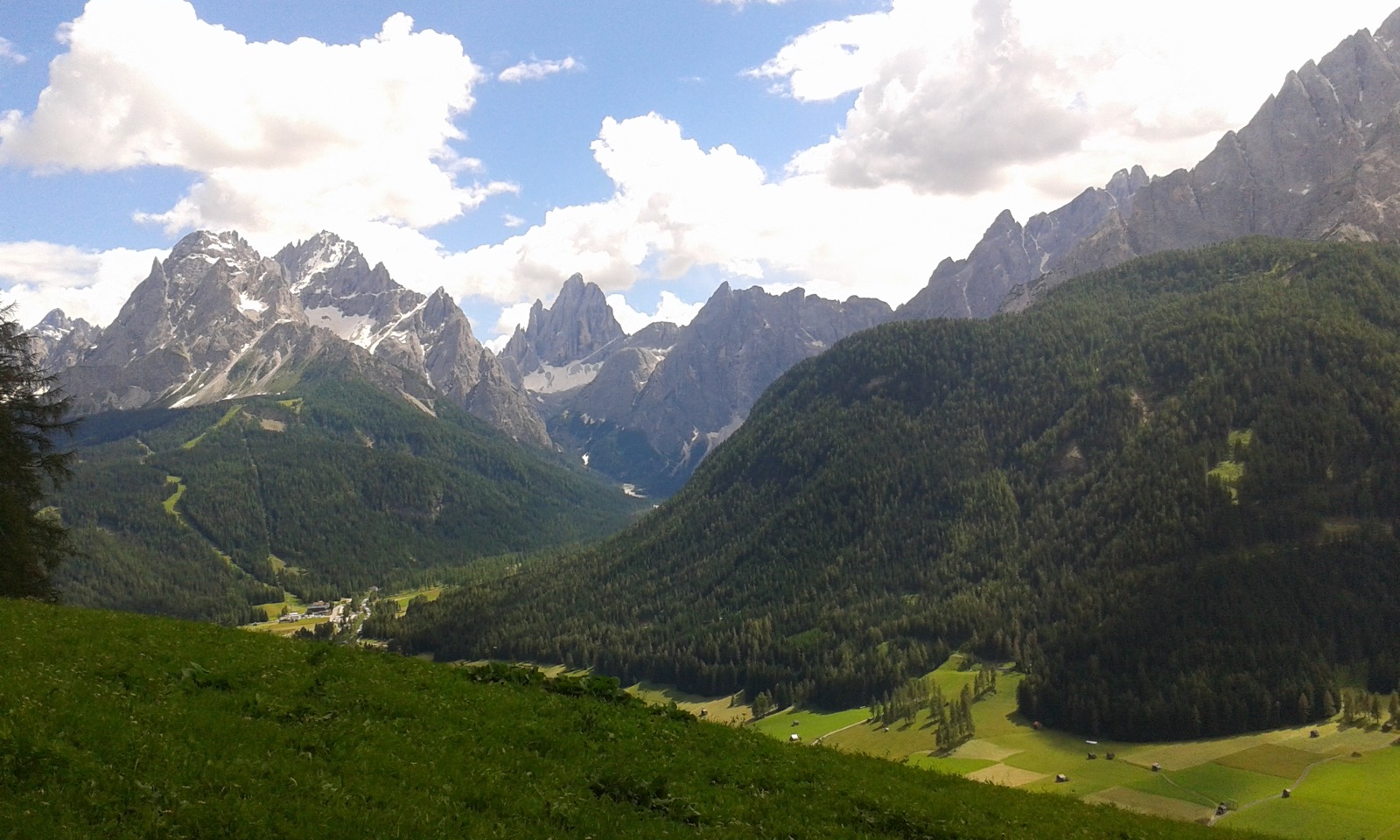
Sight · Val di Sesto (Alta Pusteria)
Five peaks above Sesto are named after an hour, from Nine to One: the sun passes over them one after another, and the peak it stands over tells you, more or less, what time it is.

Sight · Val di Sesto (Alta Pusteria)
Sesto's home mountain, a few minutes up by gondola, with open ridge walks over the Dolomites.

Sight · Val di Sesto (Alta Pusteria)
A short, spectacular valley at the foot of the Sesto Dolomites, where flat trails run beneath the peaks of the Meridiana di Sesto.
Sight · Val di Sesto (Alta Pusteria)
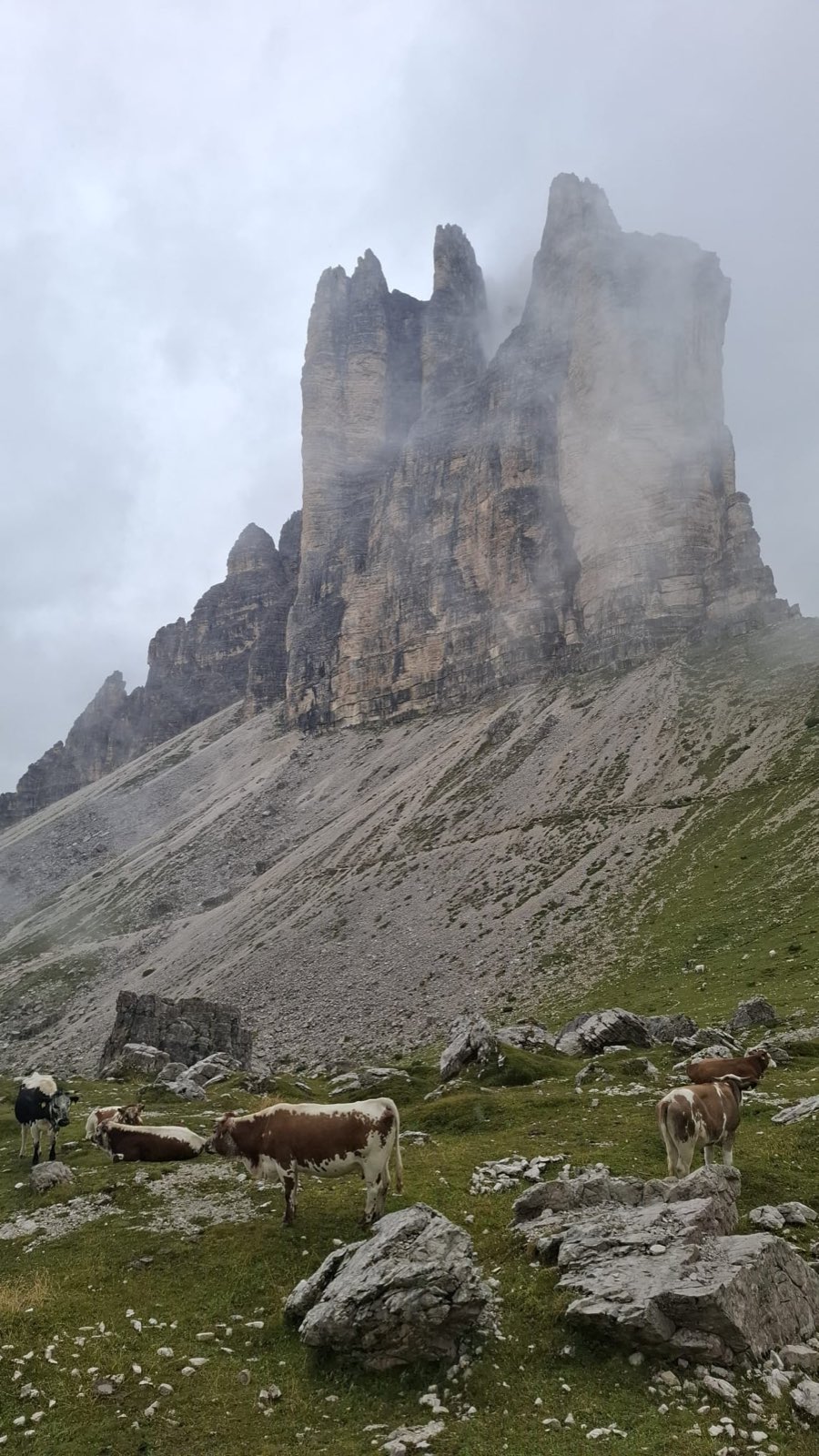
The most formidable face of the Tre Cime, walls that made the history of mountaineering, reached from the Val Fiscalina.

Sight · Val di Zoldo e Civetta
Timber-framed mountain hamlets and the surprising story of the Zoldo ice-cream makers who took their craft to the world.

Sight · Val di Zoldo e Civetta
An emerald lake at 2,143 metres beneath the Civetta, one of the most photographed stages of the Alta Via 1.

Sight · Val di Zoldo e Civetta
The throne-shaped massif towering over the Val di Zoldo, complete with dinosaur tracks at its base.

Sight · Val di Zoldo e Civetta
The wall of walls: four kilometres of rock nearly 1,200 metres tall, a myth of Dolomitic mountaineering.