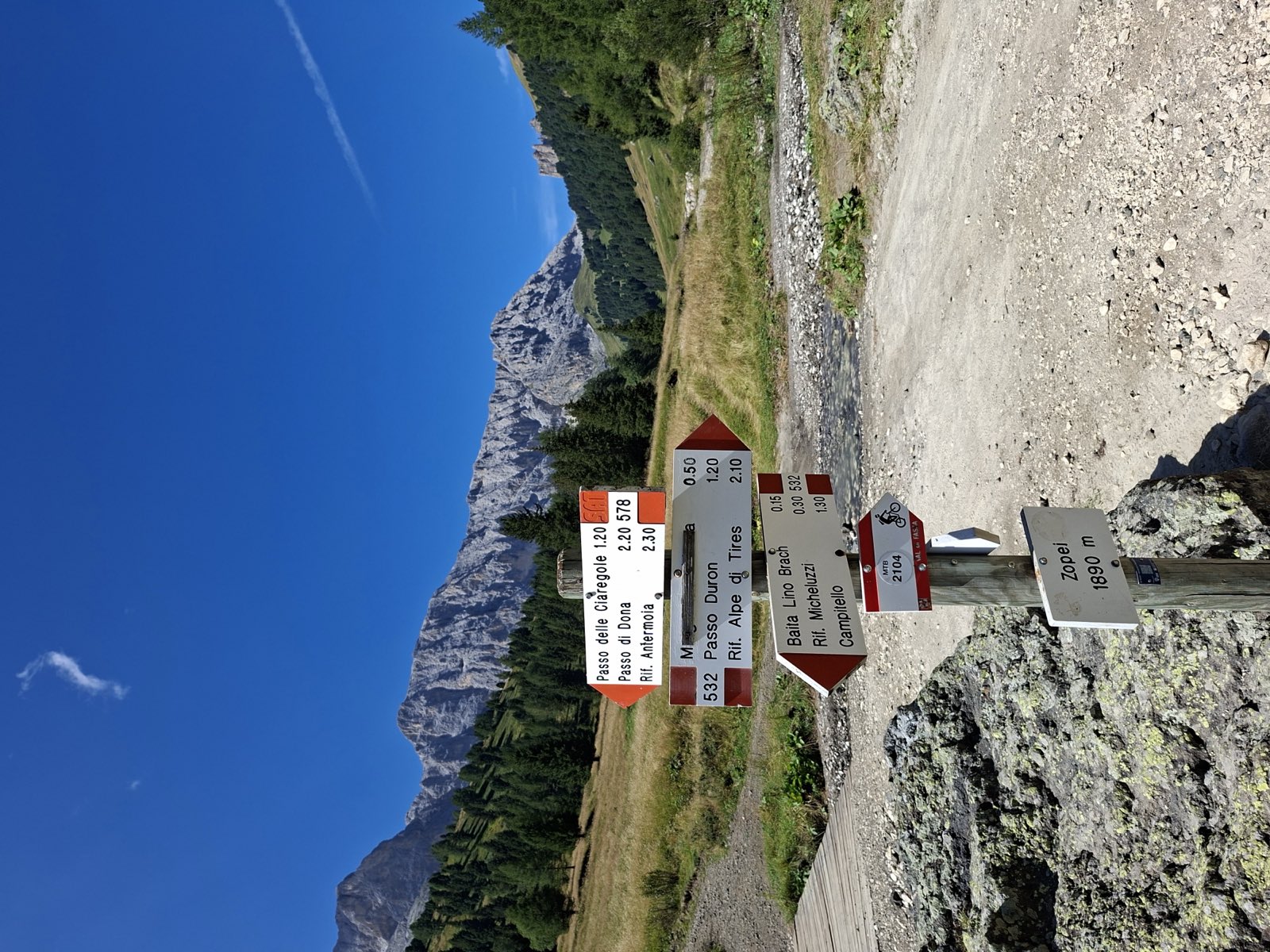
The Dolomites have something for everyone. Some people want a family stroll across meadows and past dairy huts. Others are after a scenic loop for the morning. And a few dream of walking for days, sleeping in huts along the way. They've been a UNESCO World Heritage Site since 2009, and they hold one of the densest, best-marked trail networks in Europe. There's room for every pair of legs and every level.
That's exactly the catch. With so many options, it's easy to overestimate your legs or underestimate the weather. So let's sort it out. We'll start with the CAI scale, so you actually understand what those letters on the signs mean, then move on to the best trails, the high routes, the via ferratas, how sleeping in a hut works, and what to put in your pack. The goal is simple: help you pick the right route from all of our itineraries and come home with tired legs and a smile, not with mountain rescue on the phone.
The CAI difficulty scale: reading the signs before you set off
The Italian Alpine Club rates its trails on a scale built around concrete numbers: elevation gain, length, type of terrain. Learning to read these letters is the first thing to do. It helps you pick a route you can handle and avoid getting into trouble halfway through the day.
The four categories run from the tourist trail that almost anyone can walk, all the way up to equipped routes where you need a via ferrata kit. It isn't a ranking of prestige. It's just an honest map of what's waiting under your boots. If you want to sort by level, you'll find the easy difficulty itineraries and the demanding ones.
If you're starting out or hiking with kids, aim for the T and E routes and take a look at our pick of easy itineraries. Anyone after more adrenaline will find plenty to enjoy among the via ferratas and mountaineering.
- T (Tourist): roads, mule tracks or clearly visible trails, no technical difficulty. Fine for everyone.
- E (Hiking): well-traced, well-marked mountain trails. You'll need a bit of fitness and the right footwear.
- EE (Expert Hikers): rough terrain, steep slopes, scree or small snowfields, exposed sections. This calls for a sure foot and no fear of heights.
- EEA (Expert Hikers with Equipment): the via ferratas, routes with cables and ladders where you need a harness, helmet and via ferrata kit.
The best trails in the Dolomites
There's no definitive ranking, and that's fine. But a few trails have become icons, and for good reason. Here's a handful that covers different landscapes and levels, all doable in a day and all gathered in our section dedicated to trekking.
Among the great classics is the Tre Cime di Lavaredo loop, the scenic circuit around the most photographed symbol of the Dolomites. Love water? Lake Sorapis has that milky blue that stays in your head. And the Viel del Pan trail gives you a high walk with the Marmolada in front of you the whole way.
On the South Tyrol side, the Seceda loop and the Adolf Munkel trail at the foot of the Odle have views that look painted. Same goes for the Sassolungo loop and the wide Alpe di Siusi loop, perfect if you want rolling meadows instead of vertical walls. And for a mix of history and views there's the Cinque Torri loop, with the Great War trenches still right there, out in the open.
Want to see it all? Take a look at the activities and the full list of itineraries, so you can filter by area and difficulty.
- Tre Cime di Lavaredo loop: the circuit everyone wants to do.
- Lake Sorapis: the most beloved turquoise lake in the Dolomites.
- Seceda loop and Adolf Munkel trail: the Odle from every angle.
- Sassolungo loop and Alpe di Siusi loop: from the rock faces to the wide pastures.
- Viel del Pan trail and Cinque Torri loop: balconies over the view and Great War history.
The high routes: multi-day trekking from hut to hut
The high routes are long treks that cut across the Dolomites, linking one hut to the next over several days in a row. They're numbered, and they're the fullest way to experience these mountains: you really get inside them.
The most famous and most approachable is Alta Via no. 1. It starts at Lake Braies and drops down toward Belluno: 125 km in 12 stages according to the Province of Belluno and the Dolomiti Bellunesi National Park, sleeping in the huts along the way. You don't need to climb the whole route, but you do need legs, consistency and well-planned stages. Anyone who's already seasoned will find ideas among the itineraries for experts.
The window is narrow. Usually from late June to late September, when the huts are open and the leftover snowfields have melted. Book your beds well ahead: the most popular huts fill up far in advance. For logistics, transport and stages, start with the practical guide and the where to sleep and eat section.
Via ferratas: where trekking meets the vertical
Via ferratas are routes equipped with steel cables, rungs and ladders fixed to the rock. They let you tackle exposed sections while staying clipped in. Many grew out of the military paths of the First World War, when the Alpine troops strung cables and ladders to move men and supplies between the peaks. Walking them today is a bit like walking through history.
They're rated EEA, and you don't improvise them. You need no fear of heights, a steady foot and the right gear: a harness, a helmet and a via ferrata set with an EN 958 energy absorber, the part that soaks up the energy if you fall. Without the kit, and without knowing how to use it, a via ferrata becomes dangerous. Full stop.
Among the best known is the Tridentina via ferrata, a technical, very popular classic, and the Ferrata delle Trincee on the Marmolada, which runs through tunnels and wartime positions. If it's your first time, think about a mountain guide and start with the via ferrata and mountaineering itineraries.
- Tridentina via ferrata: a well-equipped classic in the Sella group.
- Ferrata delle Trincee (Marmolada): a historic route through Great War trenches and tunnels.
- For the experts: the Piz Boe normal route and other itineraries for those who already know their way at altitude.
Sleeping in a mountain hut: how it really works
The hut is the heart of it all. You arrive tired, eat hot traditional dishes and sleep at altitudes where silence and a starry sky cost nothing. But there are rules and habits worth knowing before you head up.
At the most famous huts, booking is essentially mandatory, especially in July and August, and you do it directly with the hut by phone or email. The most common arrangement is half board: dinner, breakfast and a bed. Dinner is early, usually between 6.30 and 8 p.m., and around 10 the lights go out, because everyone needs to rest.
In the dormitory you'll need a sleeping bag liner (often required), since the blankets aren't washed between guests. Boots stay at the entrance and you get around in slippers. Bring cash, a headlamp and, if you're in a shared dorm, some earplugs. To choose where to stop, look at the where to sleep and eat section and huts like Rifugio Locatelli, Rifugio Lagazuoi and Rifugio Coldai.
- Book ahead, directly with the hut, especially in high season.
- Always bring a sleeping bag liner and slippers.
- Keep some cash on you: not every hut takes cards or has signal.
- Respect the dinner times and the evening quiet.
Gear and safety: what to put in your pack
You don't need the kit of someone climbing Everest. But a few things make the difference between a good day and a bad adventure. The basics are always the same: boots with a good sole, layered clothing, something against sun and rain.
In the mountains the weather changes fast. A clear day can turn into a thunderstorm within an hour, especially in the afternoon. Always check the forecast, set off early and aim to be back by early afternoon. Water, something to eat, a map or a GPS track and a bit of first aid should never be missing. You'll find more logistical tips in the practical guide.
For via ferratas the right gear (a harness, a helmet and an EN 958 set) isn't optional. And whatever the route, one rule holds: choose based on the experience you actually have, not the one you wish you had. In an emergency, in Italy you call 112.
- Trekking boots with a lugged sole and layered clothing.
- A rain or wind jacket, a hat and sunscreen.
- Enough water, energy snacks and a basic first aid kit.
- A map or GPS track, a headlamp and a charged phone (emergencies: 112).
- For via ferratas: a harness, a helmet and an EN 958 via ferrata set.
When to go: the right season for every step
The Dolomites trekking season sits entirely between early summer and early autumn. For most of the high trails and the high routes, the good window runs from late June to late September: huts open, snowfields melted, trails safe to walk.
July and August are the hottest, busiest months. Gorgeous, but with crowded trails and huts, especially on the famous routes. For many people the perfect month is September: fewer people, the right temperatures and that light that sets the walls glowing pink at sunset, the enrosadira. Early and late in the season, though, watch out for leftover snowfields and cold nights.
If you're traveling with kids, choose calm routes and quiet periods by starting with the family itineraries. Anyone after big traverses will find ideas among the itineraries for experts. And to make the most of lakes and waterfalls on the hottest days, there's the lakes and waterfalls section.
Frequently asked questions
Which trail is best for getting started with trekking in the Dolomites?
If you're starting from scratch, aim for the T and E routes: many scenic high loops can even be reached by lift. A good starting point is our pick of easy itineraries and family routes, with modest elevation gains and well-marked trails.
What do the letters T, E, EE and EEA on the signs mean?
They're the difficulty grades of the CAI scale. T means Tourist (for everyone), E Hiking (a bit of fitness), EE Expert Hikers (rough, exposed terrain) and EEA Expert Hikers with Equipment, meaning the via ferratas where you need a harness, helmet and kit.
Do you need to book a hut to sleep there?
Almost always yes. At the most famous huts and in high season (July and August) booking is essentially mandatory, and you do it directly with the hut. Remember the sleeping bag liner and some cash, since not everyone takes cards or has signal.
How long does Alta Via no. 1 in the Dolomites take?
Alta Via no. 1 runs from Lake Braies down to Belluno: 125 km in 12 stages according to the Province of Belluno and the Dolomiti Bellunesi National Park, sleeping in the huts along the way. You don't need to climb the whole route, but you do need fit legs and carefully planned stages.
Can I do a via ferrata without experience?
Via ferratas are rated EEA and shouldn't be attempted without experience, the right gear (a harness, a helmet and an EN 958 set) and the ability to use it. If it's your first time, the safest thing is to go with a mountain guide before heading out on your own.