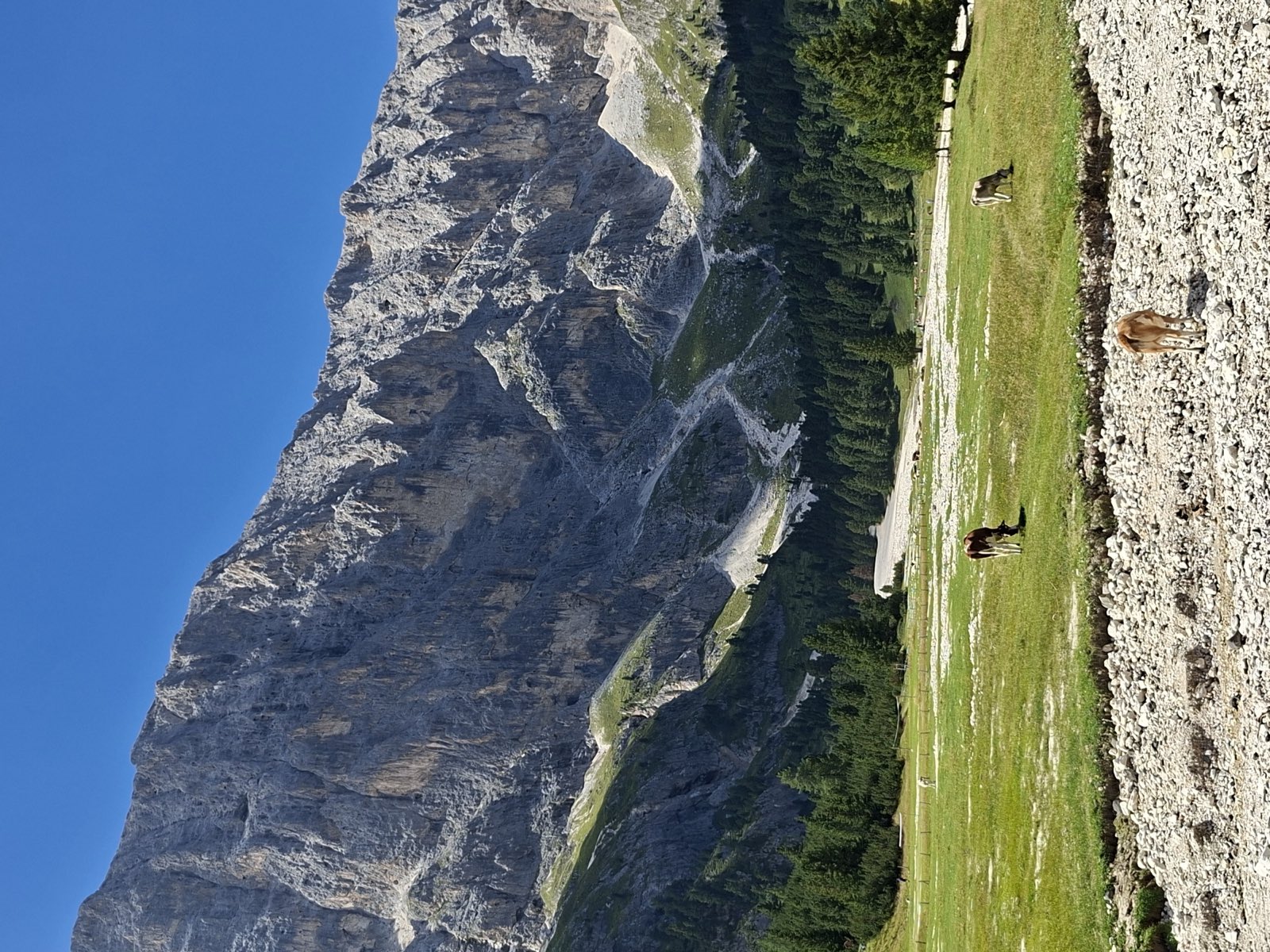
One question comes up before every trip into the mountains: when's the best time to go to the Dolomites? The slightly awkward answer is that it depends on what you're after. The same peaks you cross in a t-shirt in July turn into a snowy amphitheater in January, where you ski from one valley to the next. The same forest that's bright green in June lights up with golden larches by mid-October. Choosing your timing means choosing which version of the Dolomites you want to see.
Every season has its windows when things open and close. The lifts don't run all year, many high-altitude refuges open only from mid-June, some passes stay under snow until early summer, and the autumn colors last just a few weeks. Being off by two weeks can mean finding the chairlift idle or the trail still buried in snow. That's why it pays to think not just in seasons, but month by month.
Here we line it all up: an overview of the four seasons, what to expect month after month with weather, snow and foliage, the usual windows when the lifts open, and the events worth catching. The exact dates change every year, so we give them as indicative periods. Before you go, always check the official bulletins for your area. To get your bearings across valleys and towns, start from the places page, and for route ideas you'll find everything in the itineraries.
Overview: every season has its promise
Before we get into the details of each month, let's set out the four big windows of the Dolomite year. Summer, from mid-June to mid-September, is the trekking season: everything's open, the days are long, the high refuges are running. Autumn, between late September and October, gives you the golden larches and far quieter trails. Winter, from late November to April, is the kingdom of skiing and snowshoeing. Spring, between April and early June, is the in-between season: the lifts close, the high ground is still under snow, but the valley floor comes back to life.
Then there's the crowds. The busiest months are July, August and September for summer, and the weeks of Christmas, New Year and Carnival for winter. If you're looking for quiet and more reasonable prices, the shoulder seasons and the periods outside school holidays are your friends. The rule is simple: the more peace you want, the more it pays to move toward the edges of the seasons.
Altitude matters too. The Dolomites aren't one single place: going from a valley floor at 1,000 meters to a pass at 2,200 changes everything. In early June you can find blooming meadows in the valley and leftover snow on the high trails, and in autumn it's the other way around. To understand how the high-altitude roads behave, the notes on the Dolomite passes come in handy.
Summer (June-September): the walking season
If your idea of the Dolomites is made of trails, refuges and emerald-colored lakes, summer is your moment. The proper hiking season runs from mid-June to mid-October, with its heart between July and August, when basically everything is open: summer lifts, high refuges, mountain dairies. The days are very long, and that gives you room to set off early and head back at your own pace.
There's one constant to plan for, though: the afternoon thunderstorms. In peak summer they're not a surprise, they're almost the norm, and they break loose between early and late afternoon. People who know the mountains do just one thing: they leave at dawn, reach their goal by mid-morning, and head back before the sky builds up. It's a rhythm that also hands you the best light and the emptiest trails. The night before, it's worth checking Meteotrentino's official forecasts for the Trentino side and those of the South Tyrol weather service for the South Tyrolean side.
Summer is also the season for vertical and on-wheels activities. Besides trekking, it's the right time for via ferrata, for mountain biking and e-bikes, and for chasing lakes and waterfalls. Among the great classics to put on your list is the Tre Cime di Lavaredo loop. And if you want to understand why these mountains are so special, take a look at the Dolomites UNESCO.
- Mid-to-late June: the high trails clear of leftover snow, spectacular blooms, fewer people before the peak.
- July-August: everything open and running, but maximum crowds and frequent afternoon thunderstorms.
- First two weeks of September: often the golden moment, stable weather and thinning crowds.
Autumn and foliage (late September-October): the golden larches
There's one window of the year that enthusiasts and photographers wait for with the calendar in hand: the foliage. Around late September the larches turn from green to yellow, then to amber tones, and in a few weeks entire slopes light up gold against the pale rock walls. It starts higher up first, then works its way down toward the valley floor.
The peak shifts with altitude and with the year, but usually the first half of October is the most intense moment, with the high larches already glowing by late September and the lower valleys at their best between mid-October and early November. The rule is: the higher you climb, the sooner you find the colors. It's a period that rewards taking your time, because the trails are far quieter than in peak summer and the crisp air makes the walking pleasant.
For the foliage, a few spots have become the symbol of the season. Val Venegia, with its larches and pastures at the foot of the Pale, is a classic destination, and you reach it with the walk toward Baita Segantini in Val Venegia. Among the lakes, the Lake Carezza loop gives you the mirror of water with the forest and peaks behind it. And in autumn it's worth seeing the enrosadira on the Catinaccio and the Rose Garden, when the walls turn pink at sunset.
Winter (December-April): skiing, snowshoes and snow
Winter turns the Dolomites into one of the largest and most scenic ski areas in the Alps. The areas of the big circuit usually open between late November and the first days of December, depending on altitude and snow cover, and stay running into spring: many lifts keep going until mid-April, some push on to Easter when conditions allow. These are indicative figures, because openings depend on snow and weather.
For skiers, the typical picture is this. January is often the coldest and snowiest month, with excellent snow quality. February is the heart of the season, with days already a bit longer and cold but pleasant weather. December and March are great, but more variable. In the weeks of Christmas, New Year and Carnival, expect crowded slopes and high prices, while January after Epiphany is a window that often gets underrated.
The Dolomite winter isn't just downhill. Besides alpine skiing there are snowshoes for walking on the snow, ski mountaineering for those after altitude on their own terms, and the pairing of cross-country skiing and sledding for families and fans of a slower pace. Among the most loved winter routes are the Vallunga snowshoe walk, in the heart of Val Gardena, and the Passo Lavaze cross-country loop, in the Val di Fiemme area.
Spring (April-early June): the in-between season
Spring is the trickiest period to read. After the lifts close, which in most cases happens between mid-April and just after Easter, the Dolomites enter a transition: the snow holds at altitude, some high refuges are still shut and several trails can't be done. In the meantime, though, the valley floor comes back to life, the meadows bloom and the days get longer.
It's a season that rewards those who can adapt. May and early June are perfect for valley-floor walks, for the first lakes and the waterfalls swollen with snowmelt, for discovering the towns without crowds and with gentler prices. High-altitude hikes, on the other hand, need to be weighed carefully: north-facing trails can stay under snow for a long time and some passes only open once the snow pulls back.
If you travel in spring, keep a flexible plan. Aim for destinations at intermediate altitudes and keep an eye on the bulletins, because the situation changes from week to week. To sort out timetables, access and what to pack, take a look at the practical guide, which gathers the service information for every season.
Month-by-month recap
Laid out on a timeline, here's how the Dolomite year looks. Keep in mind these are trends: the year, the altitude and the slope can shift conditions by a few weeks.
- January: the coldest and often snowiest month, excellent snow for skiing, slopes freer after Epiphany.
- February: the heart of the ski season, longer days, cold but pleasant weather, Carnival weeks very crowded.
- March: still good snow at altitude and spring sun, great for skiing and snowshoes with milder weather.
- April: last weeks of skiing in the highest areas, lifts closing between mid-month and Easter, the transition begins.
- May: lifts closed, high ground still snowy, the valley floor in bloom, ideal for low walks without crowds.
- June: the high ground clears, spectacular blooms, the trekking season starts from mid-month and the high refuges open.
- July: full summer, everything open, very long days, but maximum crowds and afternoon thunderstorms.
- August: peak season and the busiest month, excellent conditions but bookings essential well ahead.
- September: often the best time to walk, stable weather and fewer people, foliage starts at altitude late in the month.
- October: peak foliage in the first half, quiet trails, the first summer lifts closing.
- November: a slack month, many facilities closed, the ski lifts generally reopen late in the month.
- December: the full opening of the winter season, Christmas markets, festive weeks crowded and magical.
Events: pick your timing (partly) by the calendar
Sometimes an event decides the timing for you. In summer the Dolomites host big sporting fixtures: tough mountain-bike granfondos, mountain half-marathons and days dedicated to cyclists, when some passes are closed to traffic and left to bikes alone. These are dates worth the trip if you love sport, but they shift the crowds and availability, so it's better to know them in advance.
Winter is the time of Christmas markets, which bring the old town centers to life from late November until early January, among wooden chalets, nativity scenes and the woodcraft some valleys are famous for around the world. On top of these come top-level ski events and cultural fixtures that fill the calendar of the festive weeks.
The practical advice is twofold. If you want to experience an event, book well in advance, because the lodgings sell out fast. If instead you're looking for quiet, check that your stay doesn't land right on the peak days. Either way, the exact dates change every year, so always check the official calendars for the valley you've chosen, which you'll find on the pages of the individual places like Val di Fassa, Cortina d'Ampezzo or Alpe di Siusi.
Frequently asked questions
What's the single best time to go to the Dolomites?
There's no best time that works for everyone, because it depends on what you're after. For trekking the golden moment is often the second half of June or the first two weeks of September, when conditions are excellent without the August crowds. For skiing, the heart of the season is between January and February. For the foliage, the first half of October.
When do the ski lifts open and close in the Dolomites?
Roughly, the big-circuit areas open between late November and the first days of December and stay running until mid-April, with some areas pushing on to Easter when the snow cover allows. These are indicative dates that change every year depending on snow and weather: always check the official bulletins before you go.
When can you see the larch foliage in the Dolomites?
The larches start turning yellow around late September at the highest altitudes, while the peak of color usually concentrates in the first half of October. The lower valleys are at their best between mid-October and early November. The higher you climb, the sooner you find the colors.
Can you go to the Dolomites in spring?
Yes, but with a flexible plan. After the lifts close, between mid-April and Easter, the high ground stays snowy and some high refuges and trails are still shut. May and early June are perfect for valley-floor walks, lakes and snowmelt waterfalls and towns without crowds, while high-altitude hikes need to be weighed carefully.
Which are the least crowded months to visit the Dolomites?
The quietest periods are generally November and the shoulder seasons, plus the weeks outside school holidays. In winter, January after Epiphany offers freer slopes; in summer, late June and early September combine good conditions with fewer people than the July and August peak.