
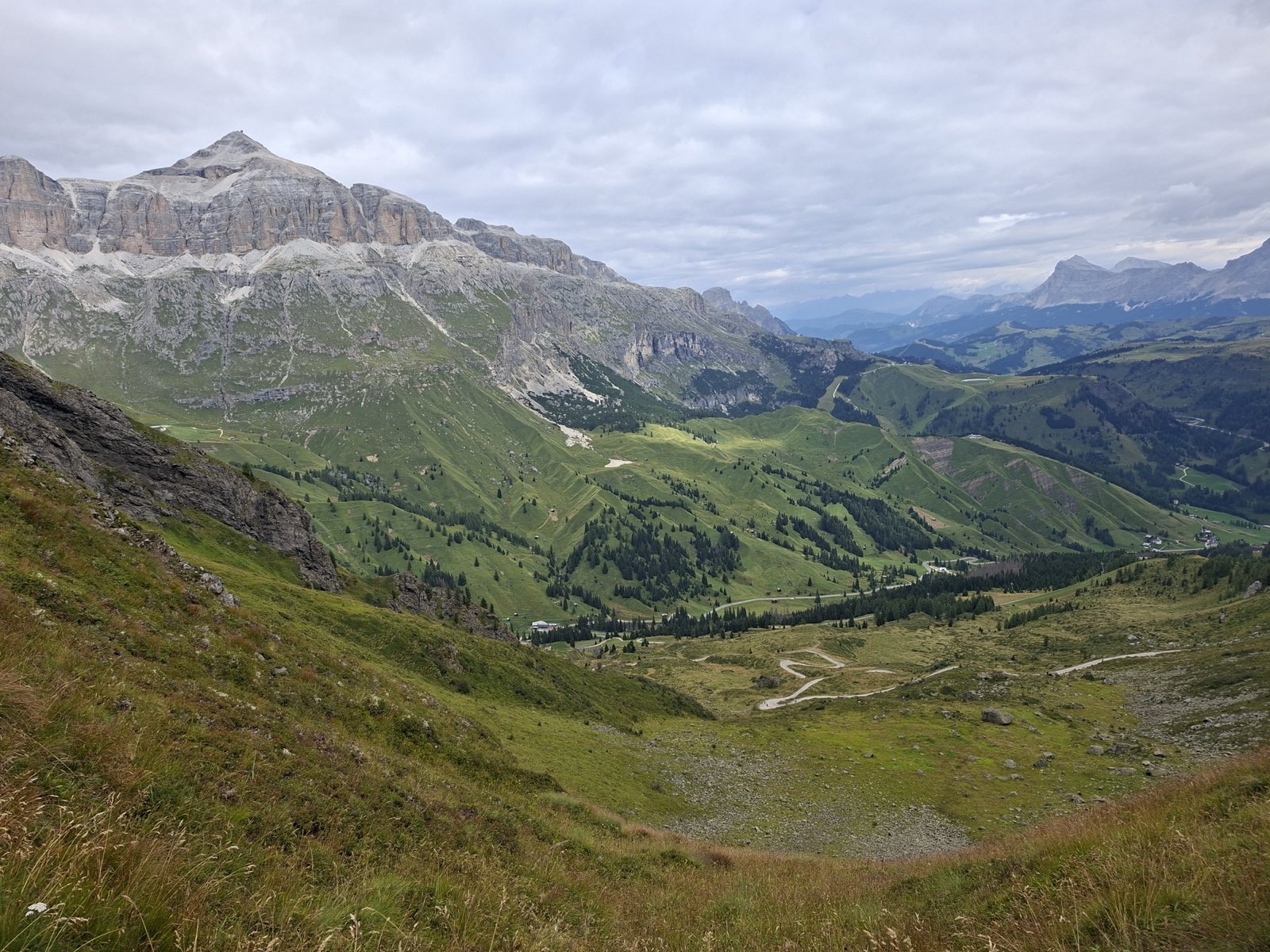
The Sella Group is the massif that divides and at the same time joins four valleys: Val Gardena, Val Badia, Val di Fassa and Arabba. That is how the South Tyrol tourist board describes it. It touches three provinces, Bolzano, Trento and Belluno, and its highest summit is Piz Boè, 3,152 metres, which Alta Badia calls one of the most accessible three-thousanders.
The tourist board sums up its shape like this: two large platforms, imposing walls and towers. Four passes run around it, Gardena, Sella, Pordoi and Campolongo, which is why the Sella sits at the centre of the Sella Ronda, the loop you ski in winter and drive, ride or cycle in summer.
The peaks with their heights, the huts, the routes and the passes on this site are listed further down, with the map.
On the map
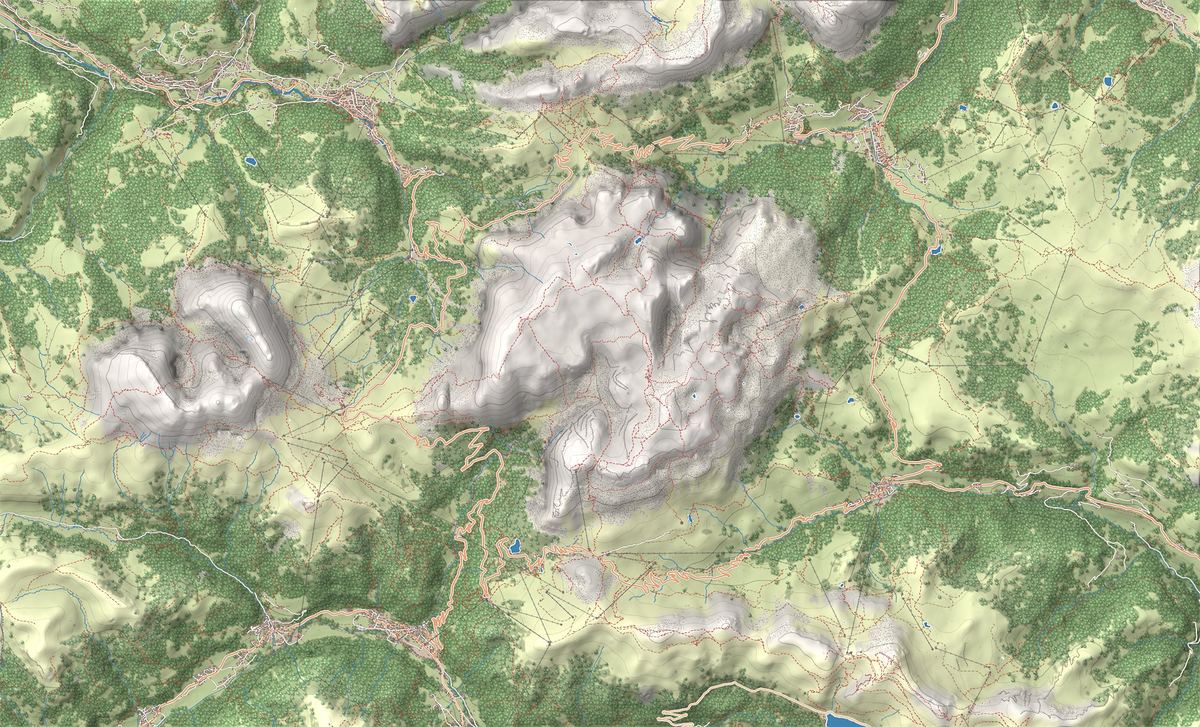
- 1Via Ferrata Tridentina to Rifugio Pisciadù: difficulty and route
- 2Piz Boè Summit Route: the easy three-thousander of the Sella
- 3Rifugio Pisciadù
- 4Rifugio Boè
- 5Rifugio Pisciadù e ferrata Tridentina
- 6Sass Songher
- 7Passo Pordoi e snodo del Sellaronda
- 8Passo Pordoi
- 9Passo Sella
- 10Passo Gardena
The best-known peaks
- Piz Boè3,152 m
- Sasso Pordoi2,950 m
- Piz Pisciadù2,985 m
- Piz Ciavazes2,828 m
- Piz Sëlva2,940 m
Elevations from the map (OpenStreetMap).
How it is built: a plateau ringed by walls
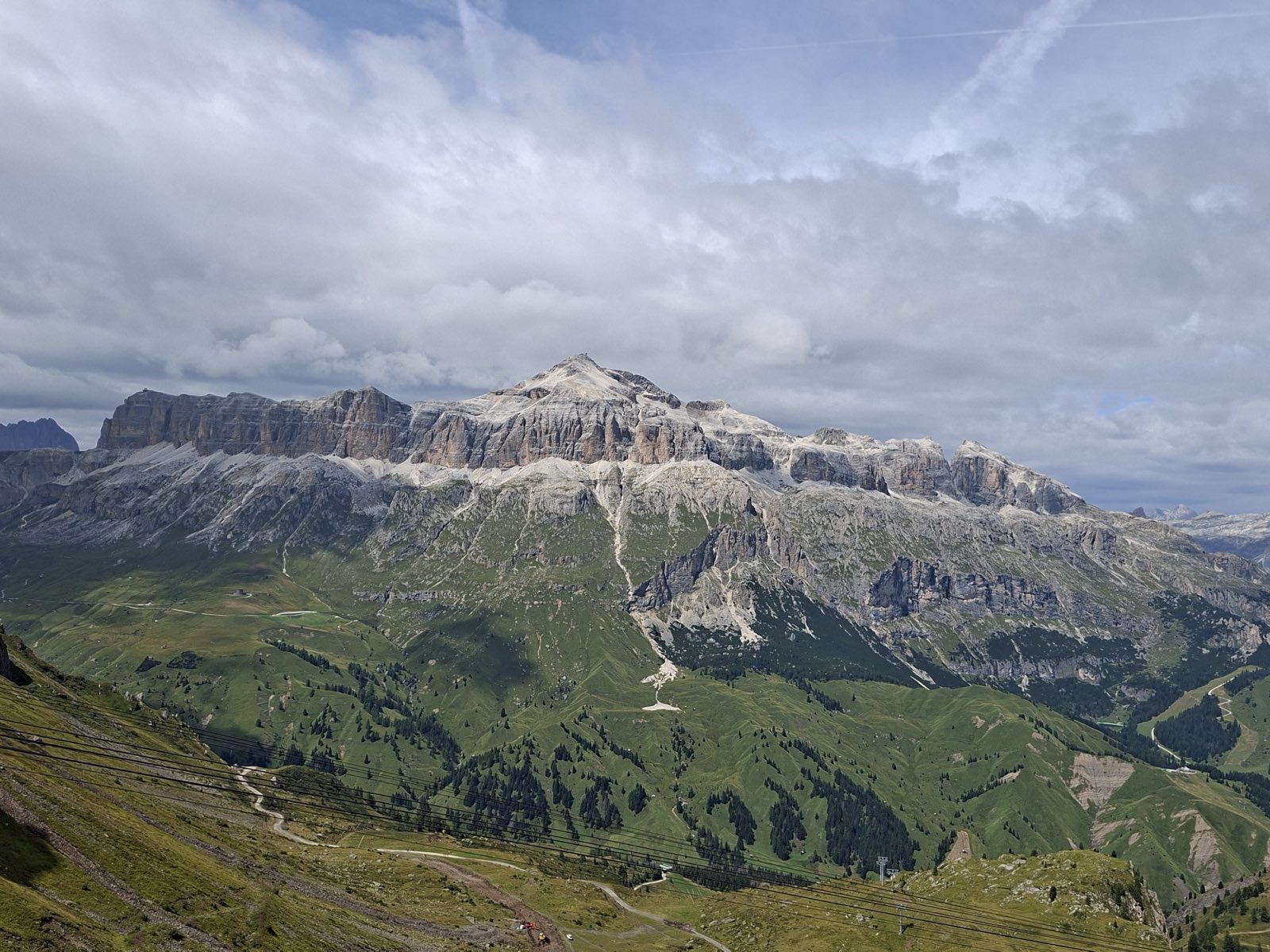
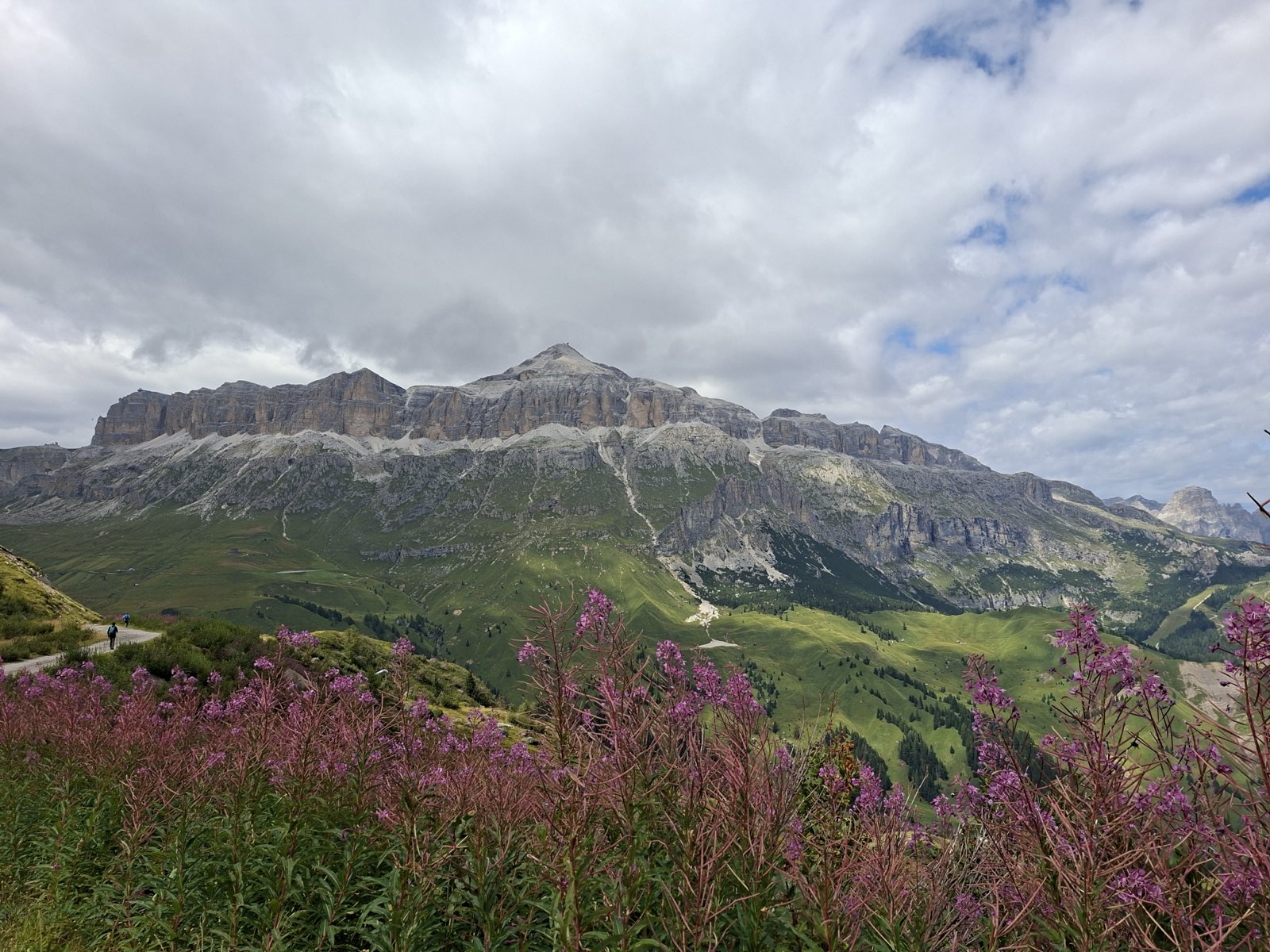
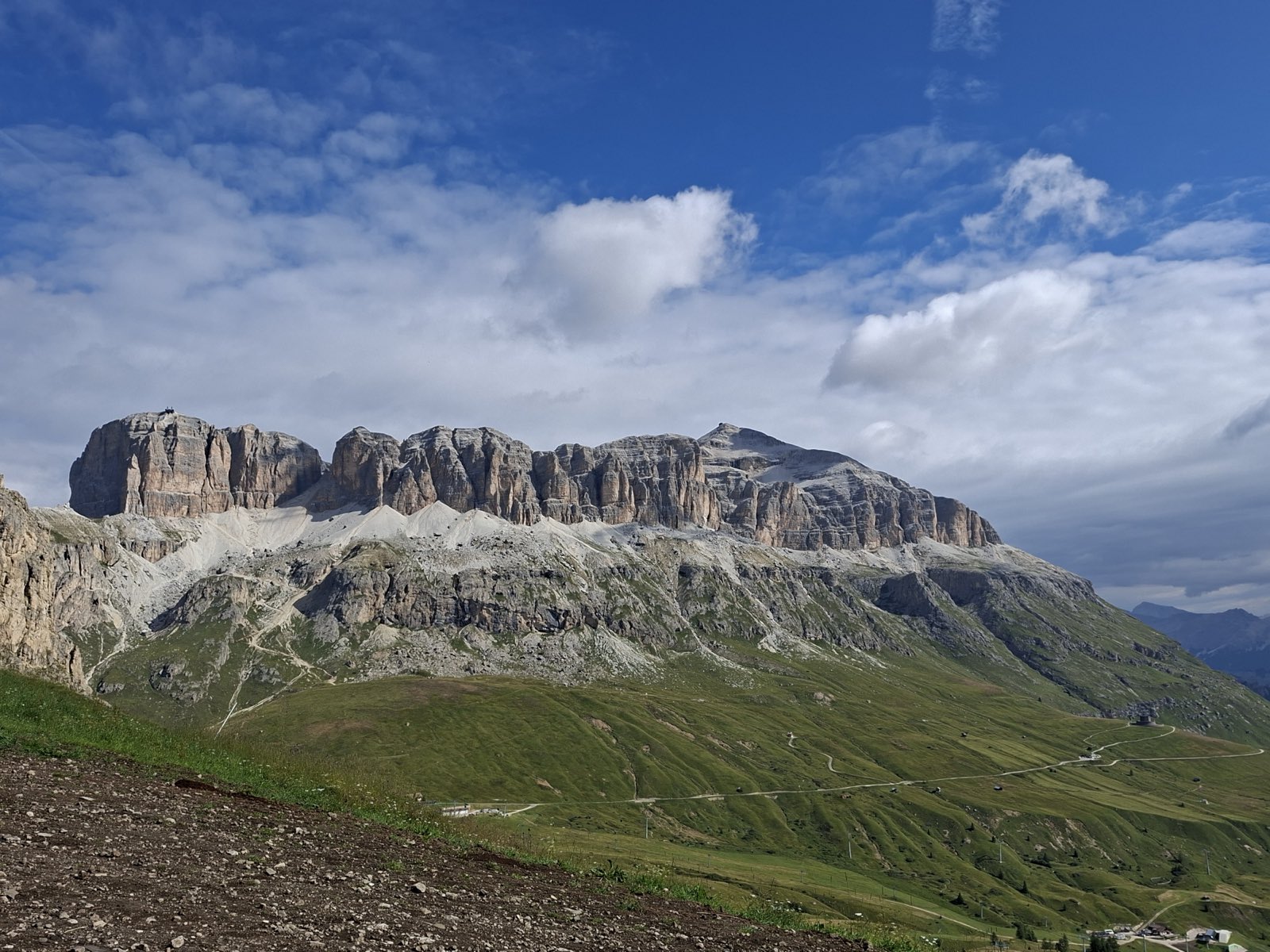
Above the walls lies a plateau of pale rock, where trails link the Boè and Pisciadù huts and where the summit of Piz Boè stands. Towards Passo Sella the group breaks up into towers, the Sella Towers, which in Val di Fassa's words dominate the pass. Towards Passo Pordoi rises Sass Pordoi, with the terrace where the cable car arrives.
The shape has a long history. The Dolomites UNESCO Foundation writes that the Sella and the Sassolungo were islands in the Triassic sea, and that the Gardena and Sella passes, between one group and the other, were arms of the sea.
Where to start and where to park
The quickest way into the group is the Sass Pordoi cable car, which rises from Passo Pordoi to 2,950 metres. From Corvara you go up with the Boè gondola and the Vallon chairlift. The Passo Gardena road, on the Colfosco side, is the base for the Tridentina via ferrata and for Val Setus. Passo Sella is the base for the Towers and for the Sassolungo circuit, right opposite.
At Passo Sella the car park at the top has 199 spaces in summer and 42 in winter. It costs 4 euros an hour for the first three hours and 2 from the fourth, up to 20 euros a day. In summer it often fills up in the morning: how often is shown in the box below, and the alternatives are in our guide on where to park at Passo Sella.
What to do: the summit, the via ferratas, the traverse
Piz Boè is a summit for experienced hikers. From the cable car station the normal route involves no climbing, but it has exposed stretches. On the summit stands the Capanna Piz Fassa, where according to Alta Badia you can also stay the night. From Corvara, Alta Badia suggests a longer and more demanding ascent via the Cresta Strënta, returning past Rifugio Pisciadù and through Val de Mesdì.
The best-known via ferrata is the Tridentina, which climbs to Rifugio Pisciadù and has a suspension bridge. The South Tyrol tourist board also describes the traverse of the group: from Sass Pordoi to Piz Boè, then to the Boè and Pisciadù huts and down towards Passo Gardena, with protected stretches on the descent. It calls for sure feet and a head for heights.
In winter the Sella is the heart of the Sella Ronda: route, timing and direction are in our guide to the Sella Ronda on skis. If you drive the passes, read which way round works better.
History, names and UNESCO World Heritage
According to the Val Gardena tourist office, the first person to climb Piz Boè, in 1864, was the Viennese Paul Grohmann, the same man who five years later made the first ascent of the Sassolungo. Rifugio Boè, on the plateau, also carries the German name Bamberger Hütte in the Alta Badia route description.
In German the group is called Sellagruppe or Sellastock, and the pass Sellajoch; in Ladin the pass is Jëuf de Sela. The Sella is not one of the nine systems of the Dolomites UNESCO site: the nearest are Puez-Odle, north of Passo Gardena, and the Marmolada, south of Passo Pordoi.
Trails in the group
 EEA · Via ferrata / Expert
 EE · Experienced hikers
Trail · Arabba e Marmolada
Piz Boè Summit Route: the easy three-thousander of the Sella
2 h 30↑ 350 m6 km
Mountain huts
 2,587 m
 2,873 m
Car park · Passo Sella
65/94
days the Passo Sella car park filled up
Recorded hourly from 01/06/2026 to 16/09/2026
Things to see
Sight · Alta Badia
Rifugio Pisciadù e ferrata Tridentina
One of the most popular via ferratas on the Sella, with a Tibetan bridge slung over the void, leading up to Rifugio Pisciadù and its high mountain lake.

Sight · Alta Badia
Sass Songher
The rock pyramid that stands alone above Corvara and Colfosco: the signature mountain of Alta Badia and a 360-degree viewpoint over the Dolomites.
Sight · Arabba e Marmolada
Passo Pordoi e snodo del Sellaronda
The key pass of the Sellaronda, crossroads for skiers and cyclists, with a cable car up to the Dolomites Terrace.
Passes
 2,239 m
 2,244 m
 2,121 m
Nearby
Places that fall inside the group’s frame but are closer to another group.
Frequently asked questions
How high is the highest peak of the Sella?
The highest peak is Piz Boè, 3,152 metres according to Alta Badia and Val di Fassa. On the summit stands the Capanna Piz Fassa hut.
Can you climb Piz Boè without rock climbing?
Yes, if you are experienced. From the Sass Pordoi cable car the normal route needs no climbing technique, but it has exposed passages and goes above 3,000 metres: you need sure feet and stable weather.
Where do you park for the Sella Group?
At Passo Sella the car park at the top costs 4 euros an hour for the first three hours, up to 20 euros a day, and in summer it often fills up in the morning: the alternatives are in our parking guide. For Val Setus there is the Pisciadù car park, on the SS243 road to Passo Gardena.
What is the Sella Ronda?
It is the loop over the four passes around the Sella: Gardena, Campolongo, Pordoi and Sella. In winter you ski it; in summer many people drive, ride or cycle it. The details are in our Sella Ronda guide.
Which region is the Sella Group in?
Two regions and three provinces. The Val Gardena and Val Badia sides are in the province of Bolzano, the Val di Fassa side in Trentino, the Arabba side in the province of Belluno, in the Veneto. Passo Sella lies on the border between Trento and Bolzano, Passo Pordoi on the border between Trentino and the Veneto.
Is the Sella Group a UNESCO World Heritage Site?
No, the Sella is not one of the nine systems of the Dolomites UNESCO site. The Foundation does mention it as an ancient island of the Triassic sea, seen from nearby Puez-Odle.